

WELLSTEAD, Edward Melvill
| Service Number: | 3727 |
|---|---|
| Enlisted: | 20 December 1916, Enlisted at Perth, Western Australia |
| Last Rank: | Private |
| Last Unit: | 51st Infantry Battalion (WW1) |
| Born: | Albany, Western Australia, 13 January 1894 |
| Home Town: | Bremer Bay, Jerramungup, Western Australia |
| Schooling: | Not yet discovered |
| Occupation: | Farmer Grazier |
| Died: | Gnowangerup Western Australia, 13 November 1978, aged 84 years, cause of death not yet discovered |
| Cemetery: |
Gnowangerup Cemetery Plot Anglican 78 |
| Memorials: | Albany & Districts Roll of Honour |
World War 1 Service
| 20 Dec 1916: | Enlisted AIF WW1, Private, 3727, 51st Infantry Battalion (WW1), Enlisted at Perth, Western Australia | |
|---|---|---|
| 29 Jun 1917: | Involvement Private, 3727, 51st Infantry Battalion (WW1), --- :embarkation_roll: roll_number: '19' embarkation_place: Fremantle embarkation_ship: HMAT Borda embarkation_ship_number: A30 public_note: '' | |
| 29 Jun 1917: | Embarked Private, 3727, 51st Infantry Battalion (WW1), HMAT Borda, Fremantle |
Help us honour Edward Melvill Wellstead's service by contributing information, stories, and images so that they can be preserved for future generations.
Add my storyBiography contributed by Geoff Tilley
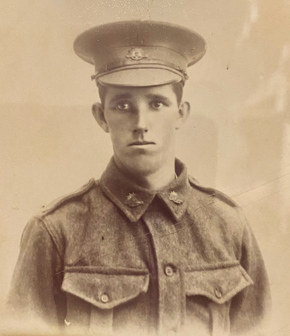
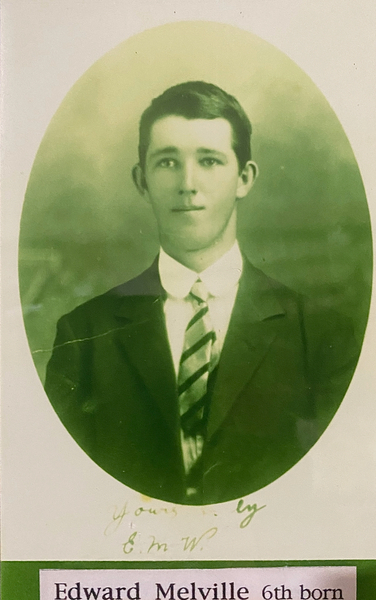
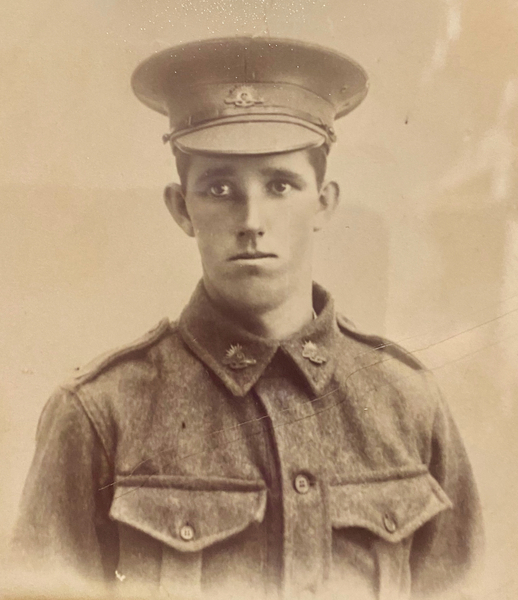
Edward (Ned) Melvill Wellstead was born on 13th January 1894 at Albany, Western Australia to parents John Wellstead and Bridgit Muir who were married in 1884 at Albany. Edward was one of twelve siblings.
His family where one of the early framers/graziers in the Bremer Bay area, south east of Albany. In his early years he helped look after the family’s sheep flocks with his younger brother Andrew. The brothers, would ride for miles from their homestead to tend to the flocks, staying away for weeks at a time and living off the land camping. It is understood they carried fire sticks around the penned sheep to ward off the dingos.
In December 1916 Edward enlisted into the Australian Imperial Forces (A.I.F.) at Perth, embarking for overseas service in June 1917 from Fremantle attached to 51st battalion, 10th reinforcements disembarking in England in August 1917.
On arriving in England, he was hospitalised, then joining 13th Training Battalion before proceeding to France in April 1918 to join his battalion in the field. By late April 1918 the Germans had captured the village of Villers-Bretonneux, with the Australians planning an immediate counter attack to take place on the night of 24 April 1918.
The attacked commenced at 10.10pm on the southside of the village with the Australian’s objective was Monument Wood where German machine gunners were positioned in the wood of Bois d’ Aquenne on the left flank of the Australians which stalled their advance inflicting heavy casualties.
The Australians pushed on through to the barbwire entanglement at the Cachy Switch reaching the road from Villers-Bretonneux to Hangard just south of their objective of Monument Wood and digging in.
It was during this attack that Edward was wounded in action (gassing) and was evacuated to hospital being discharged in June 1918. He again was hospitalised in October 1918 with ‘Trench fever”.
Whilst in hospital Edward meet his future wife, Emily Alice Littleboy who he married at St Paul’s Church within the district of Hammersmith London. Whilst in England their son was born.
In 1920 Edward was discharged from the A.I.F. returning to Bremer Bay. Emily and Leonard stayed with Ned’s parents while he set off to his Nalyerlup property, near Borden to build the family home which he called ‘Petersham” after the small village where Emily lived. They had two more sons born in 1923 and 1924.
Edward continued farming and from 1920 he operated the mail run between Borden and Bremer Bay in his Model A Ford truck until the 1950’s.
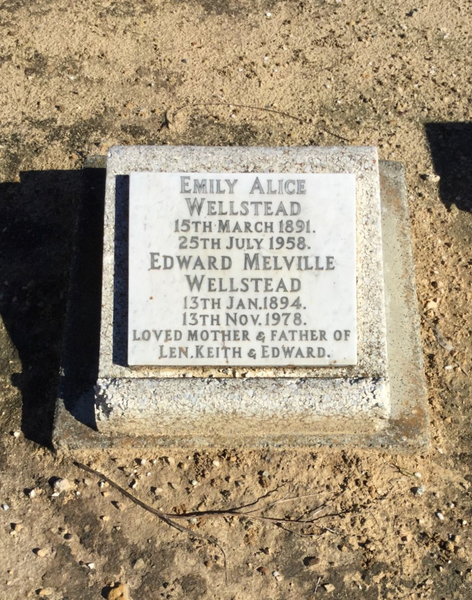
Edward died at the Hollywood Hospital, Perth on 13th November 1978 aged 84 years. He is buried in the Gnowangerup Cemetery with his wife.
Edward’s younger brother Andrew Wellstead enlisted into the A.I.F. in May 1916 attached to 44th Battalion. He served in Belgium where he was wounded in action and was awarded the Military Medal for his courage during the battle at Messines. He returned to Australian in 1919 to continuing farming in the Bremer Bay area.
Click images to start slideshow.