








LUSCOMBE, Sidney Thomas
| Service Number: | 2172 |
|---|---|
| Enlisted: | 13 July 1915, 4th Reinforcements |
| Last Rank: | Private |
| Last Unit: | 19th Infantry Battalion |
| Born: | South Devon England, date not yet discovered |
| Home Town: | Sydney, City of Sydney, New South Wales |
| Schooling: | Not yet discovered |
| Occupation: | Mercer |
| Died: | Killed in Action, France, 3 May 1917, age not yet discovered |
| Cemetery: |
No known grave - "Known Unto God" |
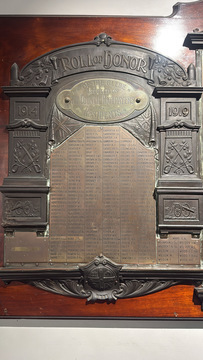
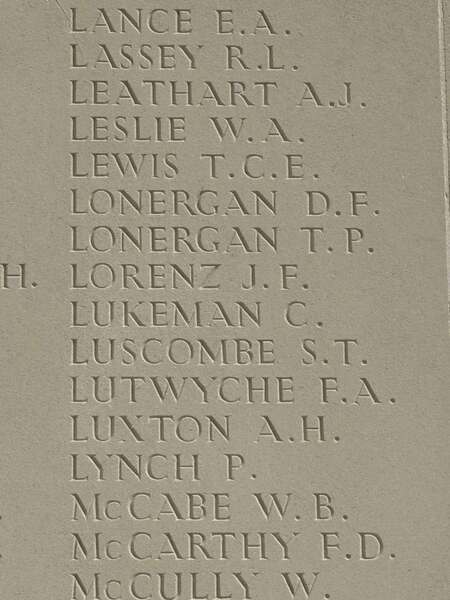
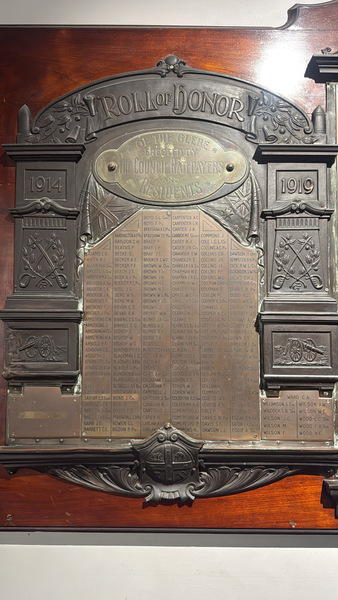
| Memorials: | Australian War Memorial Roll of Honour, Glebe Roll of Honor, Villers-Bretonneux Memorial |
World War 1 Service
| 13 Jul 1915: | Enlisted AIF WW1, Private, 2172, 19th Infantry Battalion, 4th Reinforcements | |
|---|---|---|
| 30 Sep 1915: | Embarked AIF WW1, Private, 2172, 19th Infantry Battalion, --- :embarkation_roll: roll_number: '13' embarkation_place: Sydney embarkation_ship: HMAT Argyllshire embarkation_ship_number: A8 public_note: '' | |
| 27 Jul 1916: | Wounded AIF WW1, Private, 2172, 19th Infantry Battalion, Wounded in Action in France. Sustained GSW injuries to R leg and Shell Shock. Treated in CCS 27/6/16. Transferred to 20th General Hospital 28/7/16. | |
| 7 Aug 1916: | Involvement AIF WW1, Private, 19th Infantry Battalion, Invalided to London for treatment and recovery. | |
| 19 Feb 1917: | Involvement AIF WW1, Private, 19th Infantry Battalion, Rejoined Unit - France. The Battalion was holding a reserve position at Shelter Wood - South Camp, near Fricourt (source: 19th Bttn Unit diary). | |
| 3 May 1917: | Involvement AIF WW1, Private, 2172, 19th Infantry Battalion, Killed in Action on this day. Service medals despatched: 1914-15 Star; British War Medal; Victory Medal. Next of Kin issued Memorial Plaque & Scroll. Remembered with Honour. |
Private Sidney Thomas Luscombe (2172) 19th Battalion, Australian Imperial Force Killed in Action – Bullecourt, France – 3 May 1917
Private Sidney Thomas Luscombe (2172)
19th Battalion, Australian Imperial Force
Killed in Action – Bullecourt, France – 3 May 1917 (NAA, 2026)
Private Sidney Thomas Luscombe was one of many young men whose lives crossed oceans and identities — born in England, made his life in Australia, and lost on the battlefields of France during the First World War. (Modbury Remembers, 2018)
Sidney was born in Modbury, South Devon, England, the son of Thomas Langley Luscombe and Caroline Grace Luscombe of Ley Farm, Modbury. His enlistment papers record his birthplace as Modbury near Ivybridge, Devon, and list his mother as next of kin at Ley Farm.(Modbury Remembers, 2018)
Like many young men of the era, Sidney emigrated to Australia in search of opportunity. By the time he enlisted, he was living in Glebe, Sydney, and working as a grocer / merchant. His attestation papers show he enlisted at Liverpool, New South Wales, on 13 July 1915, aged 24.
Glebe became his adopted community. Local records place his name on the Glebe Roll of Honour, reflecting how strongly he had become part of the suburb’s civic life. Newspaper memorial notices later suggest he was mourned not only by relatives, but by a close circle of friends and associates. (Glebe Historical Society, 2026)
On enlistment Sidney joined the 4th Reinforcements, 19th Battalion AIF. The 19th Battalion had been raised in New South Wales in 1915 and had already served at Gallipoli, before moving to the Western Front in France in 1916. (National Archives, 2026)
Sidney reached the front and experienced the full violence of trench warfare. His service file records that he was wounded in action in France on 27 July 1916, suffering gunshot wounds and shell shock, before being evacuated through hospitals in France and England. After recovery, he rejoined the 19th Battalion in France on 24 February 1917. (Anzac Portal, 2026)
He returned to his battalion at a critical moment.
In early 1917 the German Army withdrew to the heavily fortified Hindenburg Line, a vast defensive network of trenches, concrete positions and belts of wire. Allied commanders planned assaults around Bullecourt to rupture the line and regain momentum after the Somme campaigns. Australian divisions were tasked with some of the hardest fighting of the operation. (Anzac Portal, 2026)
Before dawn on 3 May 1917, the 19th Battalion attacked during the Second Battle of Bullecourt.
Sidney was in the first wave.(Modbury Remembers, 2018)
Red Cross Wounded and Missing witness statements later described the circumstances of his death. One comrade, Private W. J. O’Brien, recalled Sidney being beside him crossing No Man’s Land when machine-gun fire struck near the German wire. Another witness, Private H. J. Williams, stated Sidney was killed instantly during the assault. (Red Cross Records , 2026)
The attack was fought under devastating fire. Many men fell in shell holes or among the wire and could not be recovered.
Sidney Thomas Luscombe was one of them.
His records initially listed him as Missing, before a later Court of Enquiry officially determined he had been Killed in Action on 3 May 1917. His service file notes simply: “Killed in Action, France, 3.5.17.”
He has no known grave.
He is commemorated on the Australian War Memorial Roll of Honour, on memorials to the missing in France, on the Glebe Honour Board in Sydney, and on the Modbury War Memorial in Devon.(Modbury Remembers, 2018)
Sidney’s story did not end in 1917. His sacrifice became part of a continuing family tradition of service, with later generations serving Australia in uniform and through community contribution.
Though no confirmed photograph has yet been located, his life can still be clearly seen:
A Devon farm son.
A migrant who chose Australia.
A Glebe local.
A soldier of the AIF.
A young man who answered the call and never returned.
Private Sidney Thomas Luscombe is remembered with pride, gratitude and honour.
Submitted 29 April 2026 by Adam Luscombe
Click images to start slideshow.