




GOURLAY, Alexander Ross
| Service Number: | S/8809 |
|---|---|
| Enlisted: | 30 July 1943, Sydney, NSW |
| Last Rank: | Seaman |
| Last Unit: | HMAS Penguin (IV) 1939-1940/HMAS Brisbane 1940-1942/HMAS Moreton (I) 1942-1994 (Depot) |
| Born: | Sydney, New South Wales, Australia, 11 November 1925 |
| Home Town: | Croydon, Ashfield, New South Wales |
| Schooling: | Not yet discovered |
| Occupation: | Not yet discovered |
| Memorials: |
World War 2 Service
| 30 Jul 1943: | Enlisted Royal Australian Navy, Seaman, S/8809, HMAS Penguin (IV) 1939-1940/HMAS Brisbane 1940-1942/HMAS Moreton (I) 1942-1994 (Depot), Sydney, NSW | |
|---|---|---|
| 2 May 1946: | Discharged Royal Australian Navy, Seaman, S/8809, HMAS Penguin (IV) 1939-1940/HMAS Brisbane 1940-1942/HMAS Moreton (I) 1942-1994 (Depot) |
Help us honour Alexander Ross Gourlay's service by contributing information, stories, and images so that they can be preserved for future generations.
Add my storyBiography contributed
Son of Jean GOURLAY, 48 Badminton Road, Croydon, New South Wales
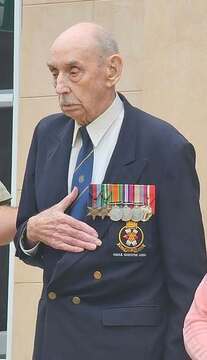
Ross is the eldest of 7 children and grew up in the suburb of Croydon.
Ross is a veteran of the Second World War. Between the ages of 14 and 16, he was in the Air Training Corps before enlisting in the Royal Australian Navy (RAN) in July 1943, at the age of 17. After initial training, Ross attended signals school for 12 weeks where he trained in Morse code. He said his official role was as a Morse code telegraphist, but unofficially was known as a ‘Jack of all trades’ – helmsman, cook, and assistant in the engine room.
In May 1944, Ross was posted to HMAS Martindale, a motor launch that the crew then sailed from Sydney to New Guinea. The launch was used for air/sea rescue and general transport duties at Milne Bay and Goodenough Island.
In December of that year, Ross was posted to the frigate HMAS Gascoyne and sailed for the Philippines. He recalls several stressful incidents. On Christmas Eve, the ship was close to a Dutch troopship that was hit by an aerial torpedo, after which Gascoyne’s crew evacuated troops from the burning ship and helped put out the fire. In January 1945, Gascoyne and 2 other warships took part in a running fight against 2 Japanese destroyers that escaped. Gascoyne then participated in the Lingayen Gulf landings in an armed hydrographic survey role and later escorted convoys.
Ross enjoyed shore leave when Gascoyne sailed home for a refit. In June, he returned to New Guinea waters from where Gascoyne escorted a convoy to Morotai in the Netherlands East Indies (Indonesia). In July, Ross took part in the Borneo campaign when Gascoyne supported the landing at Balikpapan, including shelling enemy positions. In the last month of the war, Ross spent his time escorting convoys. His ship continued serving in the East Indies until returning home in January 1946.
On 2 May 1946, Ross was discharged from the RAN. After the war, he stayed in touch with his crew through the HMAS Gascoyne Association, of which he is now the last surviving member.
After the war, Ross joined Angus & Coote as an executive trainee. He then went back to sea, and managed the duty free shop aboard the MV Monowai, a New Zealand ship. It was while on board that he met his future wife Noeline. The couple settled in Sydney and had 3 children. Sadly Noeline and 2 of their children have died.
When Ross was younger, he played tennis, golf and lawn bowls – including representing the state. Now, Ross likes daily crosswords and being with his family.
Ross credits his longevity to his positive mindset, close-knit family, social connections, good diet, and his enjoyment of living and life.
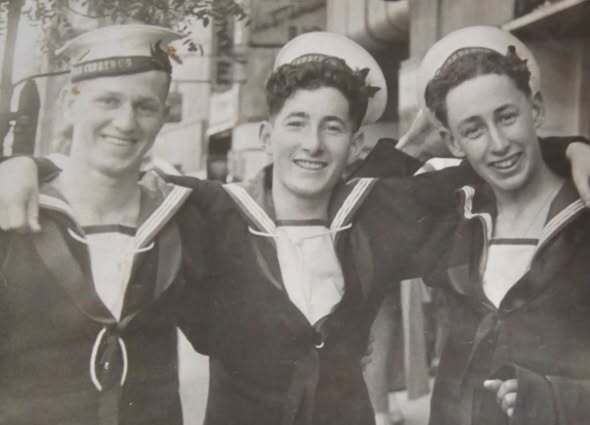
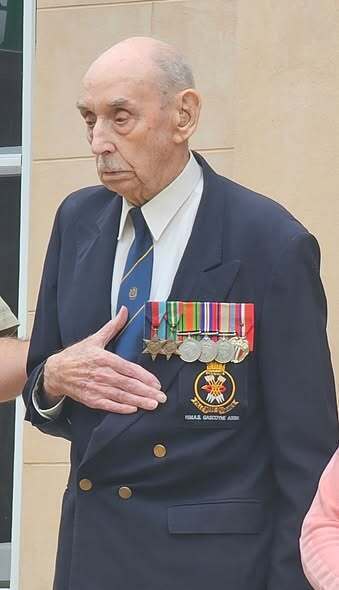
Click images to start slideshow.