







FORBES, Alexander Moore
| Service Numbers: | Officer, Commissioned Officer |
|---|---|
| Enlisted: | 10 January 1911, Staff Cadet. RMC first class. Graduated early to join the AIF in the Middle East |
| Last Rank: | Brigadier |
| Last Unit: | Fortress / Coastal Artillery & Supporting Elements |
| Born: | St Kilda, Victoria, Australia, 19 May 1892 |
| Home Town: | Not yet discovered |
| Schooling: | Church of England Grammar School, Melbourne |
| Occupation: | Student Cadet, Soldier |
| Died: | Adelaide, South Australia, Australia, 20 January 1961, aged 68 years, cause of death not yet discovered |
| Cemetery: | Not yet discovered |
| Memorials: |
World War 2 Service
| 10 Jan 1911: | Enlisted Australian Military Forces (WW2) , Royal Military College, Staff Cadet. RMC first class. Graduated early to join the AIF in the Middle East |
|---|
World War 1 Service
| 14 Aug 1914: | Enlisted AIF WW1, Lieutenant, Officer, Field Artillery Brigades, Enlisted in the Australian Imperial Force from RMC. | |
|---|---|---|
| 20 Oct 1914: | Embarked AIF WW1, Lieutenant, Commissioned Officer, 2nd Field Artillery Brigade , --- :embarkation_roll: roll_number: '3' embarkation_place: Melbourne embarkation_ship: HMAT Shropshire embarkation_ship_number: A9 public_note: '' | |
| 30 Apr 1915: | Involvement AIF WW1, Lieutenant, Commissioned Officer, 2nd Field Artillery Brigade , ANZAC / Gallipoli |
World War 2 Service
| 19 Dec 1946: | Discharged Australian Military Forces (WW2) , Brigadier, Fortress / Coastal Artillery & Supporting Elements , Retired due ill health |
|---|
Help us honour Alexander Moore Forbes's service by contributing information, stories, and images so that they can be preserved for future generations.
Add my storyBiography contributed by Sharyn Roberts
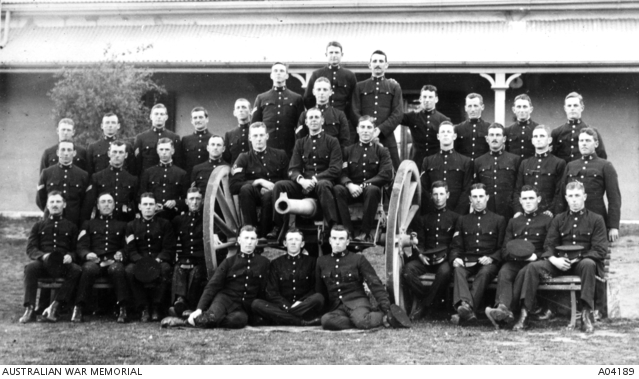
The military career of Alexander Forbes commenced at Royal Military College, Duntroon in June 1911. He was part of the first intake of students.
Staff Cadet Forbes' proved to be an exceptional student at all levels and became the first cadet to be promoted, achhieveing the rank of Acting Lance Corporal - on 1 July 1911. A further promotion followed on 1 February 1914 when he was appointed the first Battalion Sergeant Major of the Corps of Staff Cadets.
Following the outbreak of World War I in August 1914, BSM Forbes, along with the other members of his class,was specially graduated for active service with the Australian Imperial Force, on 14 August 1914. In 1917 the then Captain Forbes was awarded the Military Cross for gallantry and in 1918, having reached the rank of Major, was mentioned in despatches by Field Marshal Sir Douglas Haig. He returned to Duntroon following the end of WWI and was Adjutant of RMC from 1921 to 1922. In 1938 he was the organiser of the unveiling ceremony of the Villers-Bretonneux War Memorial by His Majesty King George VI and was appointed as a member of the Royal Victorian Order for service to the Crown. He continued to serve throughout World War 11 and reached the rank of Brigadier.
He retired on 1 December 1946. At the Jubilee Parade in 1961 to mark the 50th anniversary of the Royal Military College, Brigadier Forbes' Sword of Honour was presented to the Corps of Staff Cadets by his son, Dr Alexander James Forbes, CMG, MC.
Source: The Duntroon Society: Newsletter 2 April 1990
Biography contributed by Roderick Besier
RI: Alexander Moore Forbes, Death Notice. Death, 20.01.1961, at Adelaide. SMH 21.01.1961.
Biography contributed
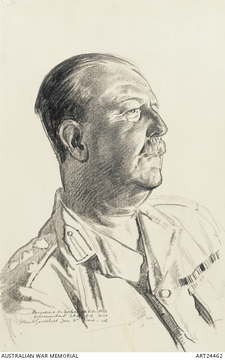
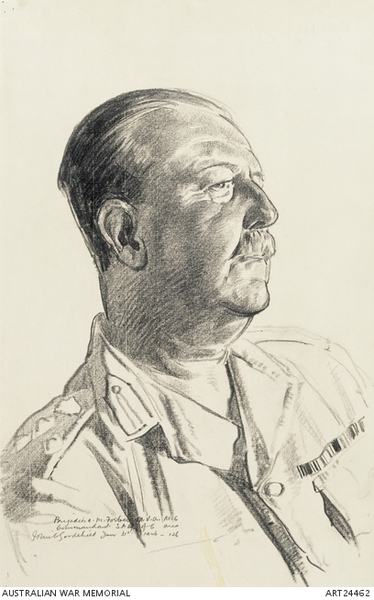
Brigadier Alexander Moore FORBES, MVO, MC (1892-1961)
This biography has been revised following the recent passing of his son LTCOL Patrtrick Forbes, MC, and their unique family legacy.
Brigadier Alexander Moore Forbes, MVO, MC (1892–1961) was a distinguished Australian soldier and part of the only family in the nation's history to win the Military Cross across three consecutive conflicts, namely WW1, WW2 and Korea.
Born 19 December 1892 in Aberdeen, Scotland, Alexander emigrated with his family to Australia and made their home in Melbourne.
He joined the inaugural 1911 class at the Royal Military College, Duntroon, where he distinguished himself in academic and military accomplishment, becoming the first Cadet Battalion Sergeant Major of the Corps of Staff Cadets and was awarded the first Sword of Honour as 'dux' of the Graduating Class.
Along with the rest of the Class, which was graduated early, they were enlisted in to the newly formed Australian Imperial Force. for service 'at his majesty's pleasure'.
Alexander was assigned to the 1st Field Artillery Brigade, and deployed with it to Gallipoli, until he was evacuated with dysentery / enteric fever in July of 1915. As the AIF reformed in Egypt after Gallipoli, he was appointed to command a newly raised Howitzer Battery, the 103rd, which he took to France as its OC.
Alexander was awarded the Military Cross (MC), gazetted in 1917 for bravery at Pozières, on the Somme in the late summer of 1916. He subsequently served on the Artillery Staffs of the 1st and 5th Divisions. He was personally Mentioned in Despatches (MID) by Field Marshal Haig.
Following the War, he returned to Australia, where he served as the Ropyal Military COllege's Adjutant from 1921-22, and subsequebntly held various staff appointments. He was tasked to organise the 1938 opening of the Villers-Bretonneux Memorial in France, by King George VI. For its flawless orchestration, , he
was appointed a Member of the Royal Victorian Order (MVO).
World War II was an anti-climax for him in many ways. Chronic illness from WWI limited overseas deployment.
By now a Colonel, he was appointed to command the Sydney Coastal Artillery and Newcastle Fixed Defences, from whence he retired as a Brigadier in December 1946.
Brigadier Forbes passed away in Adelaide on 20 January 1961.
His legacy is permanently anchored at the Royal Military College (RMC), Duntroon, where his historic achievements continue to inspire new generations of Australian Army officers. His original 1914 Sword of Honour—the first ever awarded at Duntroon—remains in active ceremonial use. The sword is traditionally carried by the Corps Sergeant Major (CSM) of the Corps of Staff Cadets during major graduation parades, creating a direct, unbroken line between the college’s inaugural 1911 class and modern graduates.
He is also the patriarch of a unique military gallantry lineage. His is the only Australian family to have won the Military Cross (MC) in three consecutive conflicts. Alexander won his MC in WWI, his son Alexander James (known universally as Jim) won it in WWII, and his son Patrick won it in the Korean War.
His personal diaries, correspondence, and military papers are preserved within the RMC archives as foundational documents of early Australian military history. His record is taught to incoming cadets as the gold standard for leadership, discipline, and RMC tradition.
Compiled by Steve Larkins July 2026
Click images to start slideshow.