







NUNN, William Vincent
| Service Number: | TX8149 |
|---|---|
| Enlisted: | 9 September 1941 |
| Last Rank: | Private |
| Last Unit: | 2nd/4th Infantry Battalion |
| Born: | Moonah, Tasmania, Australia, 14 May 1916 |
| Home Town: | Moonah, Glenorchy, Tasmania |
| Schooling: | Not yet discovered |
| Occupation: | Mill Hand |
| Died: | Complications of treatment for damage caused to his lungs from fumes during the war, Melbourne, Victoria. Australia, 16 October 1963, aged 47 years |
| Cemetery: |
Cornelian Bay Cemetery and Crematorium, Tasmania On a nice hill facing the waterfront. Buried with his wife, Nancy Nunn, who passed in 2012. |
| Memorials: |
World War 2 Service
| 9 Sep 1941: | Enlisted Australian Military Forces (WW2) , Private, TX8149, 2nd/4th Infantry Battalion | |
|---|---|---|
| 29 May 1945: | Wounded TX8149, New Guinea - Huon Peninsula / Markham and Ramu Valley /Finisterre Ranges Campaigns, Evacuated to 104 Australian Casualty Clearing Station, New Guinea, Suffering From Malaria | |
| 3 Dec 1945: | Discharged Australian Military Forces (WW2) , Private, TX8149, 2nd/4th Infantry Battalion |
Help us honour William Vincent Nunn's service by contributing information, stories, and images so that they can be preserved for future generations.
Add my storyBiography contributed by Jack Ihlow
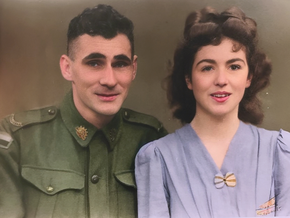
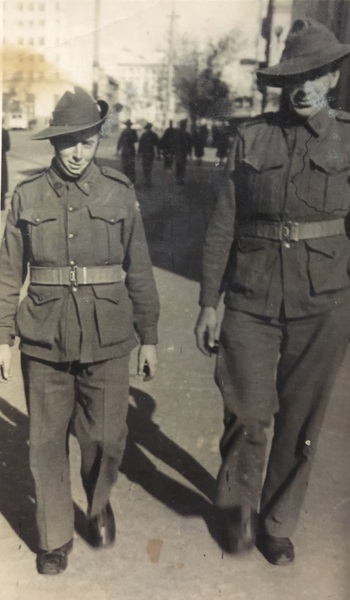
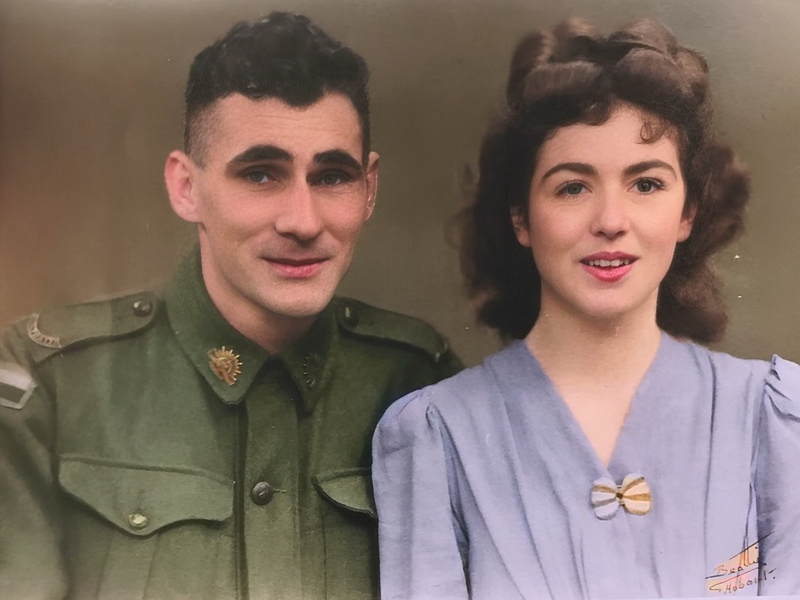
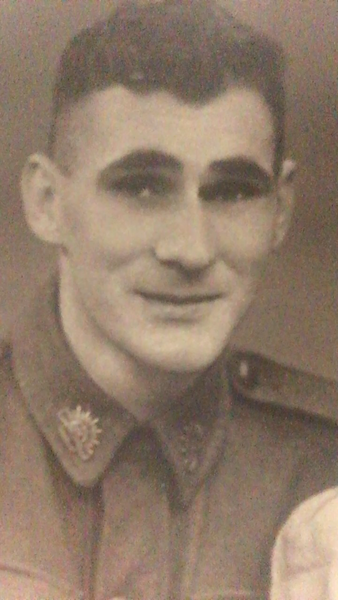
William Vincent Nunn was born in 1916 to Vincent Nunn and Thelma Perkins. He lived in a small house, 38 Hopkins Street, Moonah, Tasmania, with his family. In his late early 20s, he worked at a farm in Lower Longley for a lady named Lavinia Lovell. It was at this farm that he met Mrs Lovell's son and Daughter, Colin Henry Tennant and Nancy Isabelle Tennant. He fell in love with Nancy, and Colin would also go on to join the Royal Australian Air Force in 1943 as a Leading Aircraftman. In 1941, William would be called up to service in the Australian Army. He was assigned to the 2/4th Australian Infantry Battalion. In training, he met a fellow soldier who he became good friends with. In about 1942 he was sent with his Battalion to Melbourne, Victoria. During deployment here, a photo of him and his friend was taken of the two walking down a street. At some point in the war his friend was killed in action. William was sitting in a trench with him in New Guinea. They were taking fire from a Japanese sniper, and when William ducked down to reload, his friend stood up and fired to cover him. He was struck in the head in died instantly. He is still unidentified by our family since, but the photo remains a strong foothold in our family history. Later in the war William got malaria, and was evacuated to a casualty clearing station, where he was treated by natives, the fuzzy wuzzies. After this, he was sent to Cairns with his Battalion, and then back home. He never spoke of the war too much, it was too horrific to think about. In 1943 he married Nancy while likely on leave. In 1947 he had a daughter (my great grandmother), Kaye, later followed by more children. Kaye still cries when talking about him, even 62 years after his passing. He was a good man, who loved his family very much and went through a war so horrible it was barely spoken about, even though he fought for 4 years of his 46 year life. In 1963 he suffered a stroke in his sleep apparently due to damage done to his body after breathing in fumes in the war. He woke up, paralysed on one side of his body. The specific treatment they wanted to give him was not available in Tasmania, so he was flown to Melbourne, Victoria for treatment. During the treatment he passed away from causes I am not exactly sure of. He was just 46 years old. He was brought back down to Hobart for burial in Cornelian Bay Cemetery and Crematorium. In 2012, at the age of 85, his wonderful wife, Nancy, joined him, after 49 years apart. They are buried on a nice little hill facing the waterfront. Kaye visits them weekly. Kaye used to cry at her father's grave, sometimes bringing a blanket and sleeping next to him, a reminder that although they might be names and numbers in history books, they were also loved members of their family. Some of them never even lived to have children, leaving parents without their sons, and no grandchildren. Although having a tragic life, William seems to have made the most of it. He passed young, but spent his final years in a warm home with a wonderful family rather than a muddy hot trench in New Guinea, and that I'm sure he was grateful for long after the war. Rest in peace Pop, I'm sure we'll meet someday. Thank you for your service.
Click images to start slideshow.