




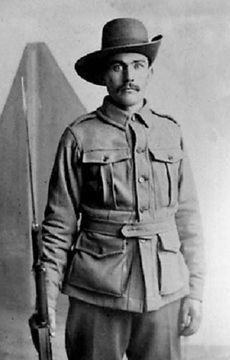
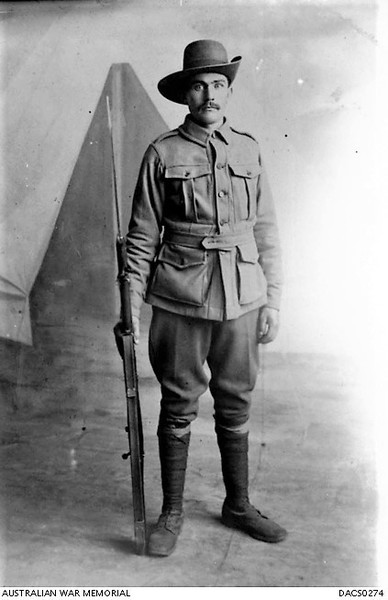
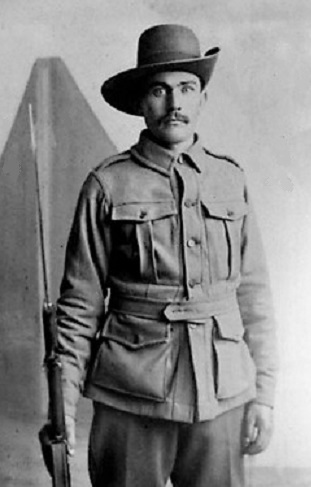
KNIGHT, William John
| Service Number: | 2011 |
|---|---|
| Enlisted: | 18 February 1915 |
| Last Rank: | Lance Corporal |
| Last Unit: | 4th Machine Gun Company |
| Born: | Shepparton, Victoria, Australia, 1883 |
| Home Town: | Mooroopna, Greater Shepparton, Victoria |
| Schooling: | Not yet discovered |
| Occupation: | Miner |
| Died: | Influenza & pneumonia, Exhibition Hospital, Brunswick, Victoria, Australia, 14 July 1919 |
| Cemetery: |
Mooroopna Public Cemetery, Victoria |
| Memorials: | Mooroopna Methodist Church Honor Roll, Mooroopna War Memorial |
World War 1 Service
| 18 Feb 1915: | Enlisted AIF WW1, Private, 2011, 16th Infantry Battalion (WW1) | |
|---|---|---|
| 26 Apr 1915: | Involvement Private, 2011, 16th Infantry Battalion (WW1), --- :embarkation_roll: roll_number: '12' embarkation_place: Fremantle embarkation_ship: HMAT Hororata embarkation_ship_number: A20 public_note: '' | |
| 26 Apr 1915: | Embarked Private, 2011, 16th Infantry Battalion (WW1), HMAT Hororata, Fremantle | |
| 11 Mar 1916: | Transferred AIF WW1, Private, 4th Machine Gun Company | |
| 11 Apr 1916: | Promoted AIF WW1, Lance Corporal, 4th Machine Gun Company | |
| 12 Dec 2017: | Discharged AIF WW1 |
Help us honour William John Knight's service by contributing information, stories, and images so that they can be preserved for future generations.
Add my storyBiography contributed by Stephen Brooks
William John Knight was born at "Orange Grove,'' Caniambo, near Shepparton, Victoria, in 1883. At the age of ten he went to Melbourne with his parents and completed his education, after which he joined the cadets, taking great interest in the movement. In 1902, at 19 years of age, he sailed to the West Australian goldfields; and gained the position of overseer, which he held up until 1911, when he made a trip round the world, visiting the British Isles, America and the Continent. The trip extended over three years and it was reported in the local papers that his parents eagerly awaited him on his return to his parents' residence, Mooroopna. Eventually, he returned to Western Australia, and enlisted in Kalgoorlie in early 1916.
He served with the 16th Battalion on Gallipoli from June 1915.
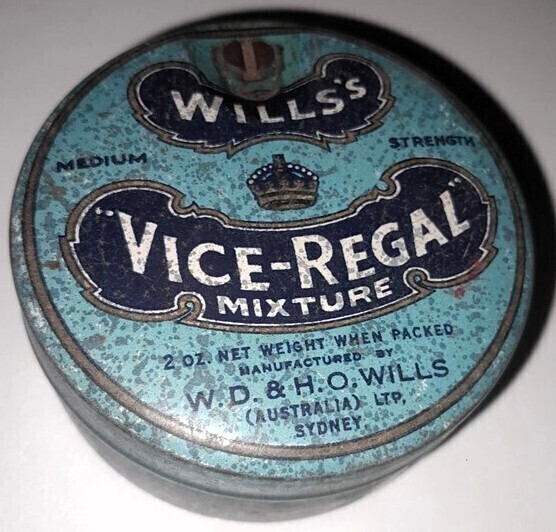
He wrote a letter home in 1915 which was published in the Kyabram Guardian, “You will be glad to hear from me again and to know that I have been going on well and keeping remarkably well in health since I have been here. I have also been fortunate in that I have escaped all ‘Jacko the Turks,' lead and iron rations, am more glad than ever to be here and would not be an onlooker back in Australia if it was to save me two lives. It is simply grand to be here, doing your bit, and when I listen to our big guns talking it sends a thrill of pride through me that I never experienced before — especially the navy guns, my word, they are 'little loves.' I never had long in Egypt. I was glad of that — I did not like there at all and would much rather be here. I accidentally drop across a few old mates and acquaintances from W.A. here. Paper is very scarce; so is good tobacco. We get some given to us once a week, but it is generally rotten with mildew. Of course we can buy nothing here yet. We are having hot, but good weather here Iately, it is the hottest month I suppose and the flies are bad. A lot of parcels and mails never reach the men that they are sent to, so it is not worth getting any sent or else I would ask for a few ounces of my old Full Vice-Regal tobacco now and again, Still it is a long while before a reply would get to us and we'll be to Tipperary by then, and have ‘milk and honey’ once again.”
During the reorganisation of the AIF in Egypt during early 1916 he was transferred to the 4th Machine Gun Company and promoted to Lance Corporal.
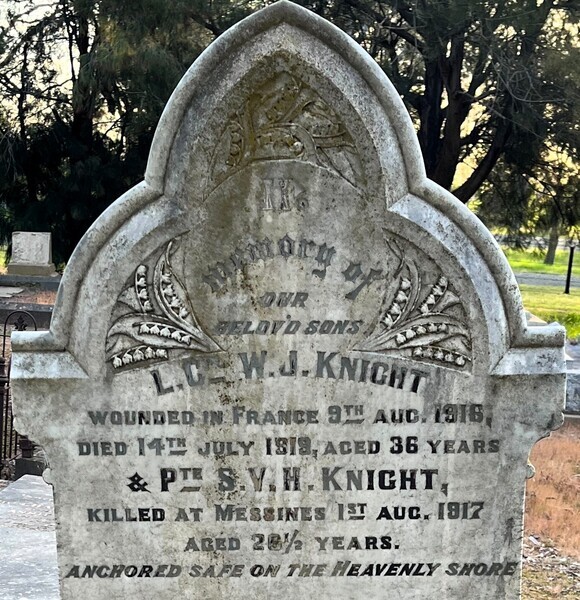
On 9 August 1916 at Pozieres, France, Knight received a shell wound to the right leg and a gunshot wound to the left foot. His right leg was amputated and his left foot was badly damaged. A second amputation during December 1916 resulted in his leg being removed from the thigh and he was fitted with an artificial limb. He returned to Australia 10 September 1917 and was discharged medically unfit soon after. He was awarded a pension of 60 shillings a fortnight.
William John Knight died of influenza and pneumonia at the Exhibition Hospital, Brunswick, Victoria, on 14 July 1919. His name is not recorded on the Australian War Memorial Roll of Honour.
His younger brother, 769 Pte Sydney Victor Herbert Knight, 44th Battalion, was killed in action at Messines, 1 August 1917.
Click images to start slideshow.