





SPARSHOTT, Edward
| Service Number: | 43793 |
|---|---|
| Enlisted: | 29 September 1941 |
| Last Rank: | Corporal |
| Last Unit: | Aircraft / Repair / Salvage Depots |
| Born: | Hastings, England, 8 October 1900 |
| Home Town: | Brisbane, Queensland |
| Schooling: | Not yet discovered |
| Occupation: | Not yet discovered |
| Died: | Brisbane, Queensland, Australia, 11 October 1950, aged 50 years, cause of death not yet discovered |
| Cemetery: |
Mount Thompson Memorial Gardens & Crematorium, Queensland |
| Memorials: |
World War 2 Service
| 29 Sep 1941: | Enlisted Royal Australian Air Force, Corporal, 43793, Aircraft / Repair / Salvage Depots | |
|---|---|---|
| 31 May 1945: | Discharged Royal Australian Air Force, Corporal, 43793, Aircraft / Repair / Salvage Depots |
Help us honour Edward Sparshott's service by contributing information, stories, and images so that they can be preserved for future generations.
Add my storyBiography contributed by Dean Sparshott
In 1941 Ted joined the Royal Australian Air Force. He was liked and very well thought at Somerset Dam where he was working at the time, so his friends gave him a big send off in a local hall. Ted was sent to the front line of the war against the invading Japanese. He was a guard at the air force base at Milne Bay, New Guinea. When the Japanese attacked the airstrip the fighting was fast and furious, rampaging and relentless. Ted took part and even the cooks fought alongside their mates, so he said later. After the battle he said the dead were everywhere, but more Japanese than Australians. This was one of the battles that saved Australia from invasion and slowed the progress of the invaders over the Owen Stanley Ranges and down to Pt. Morseby.
When the war ended Ted was discharged and worked at Hedley Park sorting and arranging disposal of all sorts wartime surplus supplies, most of which were dumped by the Americans. Later he became ill and medically unfit (Totally and Permanently Injured). In the jungles of New Guinea he had contracted a fatal and very rare blood decease (similar to malaria). He became a patient of the Greenslopes Military Hospital and had many blood transfusions to keep alive. He was, in fact, the first patient to survive for so long over a lengthy period, having had a record number of blood transfusions. His photo, together with photographs of his doctors and nurses, appeared in “The Courier-Mail”.
Ted qualified for the following awards:1939-45 Star, Pacific Star, War Medal 1939-1945, Australia Service Medal 1939-1945.
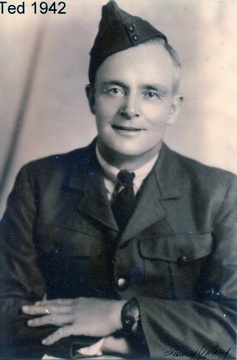
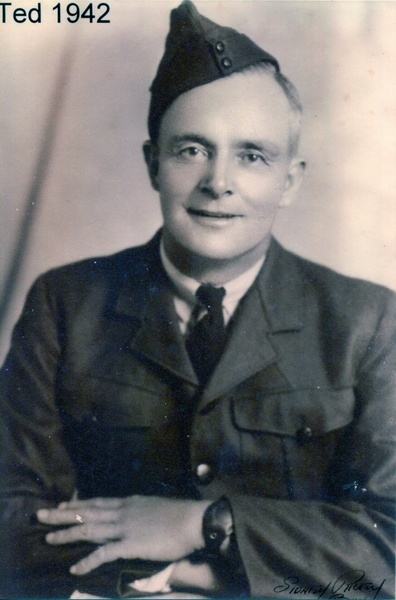
Click images to start slideshow.