







POOLEY, George Picton Phillips
| Service Number: | 2676 |
|---|---|
| Enlisted: | 4 November 1914 |
| Last Rank: | Sergeant |
| Last Unit: | 45th Infantry Battalion |
| Born: | Auckland, New Zealand, 28 October 1889 |
| Home Town: | Manly, Manly Vale, New South Wales |
| Schooling: | Not yet discovered |
| Occupation: | Commercial Traveller |
| Died: | Heart Failure, Cannon Hill, Queensland, Australia , 8 October 1958, aged 68 years |
| Cemetery: |
Lutwyche Cemetery, Brisbane, Qld Monumental Portion 14 of Lutwyche Cemetery, Brisbane. |
| Memorials: |
World War 1 Service
| 4 Nov 1914: | Enlisted AIF WW1, Private, 2676, 13th Infantry Battalion | |
|---|---|---|
| 9 Aug 1915: | Involvement Private, 2676, 13th Infantry Battalion, --- :embarkation_roll: roll_number: '11' embarkation_place: Sydney embarkation_ship: HMAT Runic embarkation_ship_number: A54 public_note: '' | |
| 9 Aug 1915: | Embarked Private, 2676, 13th Infantry Battalion, HMAT Runic, Sydney | |
| 24 Mar 1920: | Discharged AIF WW1, Sergeant, 2676, 45th Infantry Battalion , 2nd MD |
Help us honour George Picton Phillips Pooley's service by contributing information, stories, and images so that they can be preserved for future generations.
Add my storyBiography contributed by Evan Evans
From Australian Remembrance Army
Over the past six years we have submitted the service records and causes of death of several hundred veterans to the Office of Australian War Graves for assessment for Official Commemoration. To date, more than 100 of these veterans interred at Lutwyche Cemetery have been accepted, and their graves are now being formally marked and will be maintained in perpetuity by the Office of Australian War Graves.
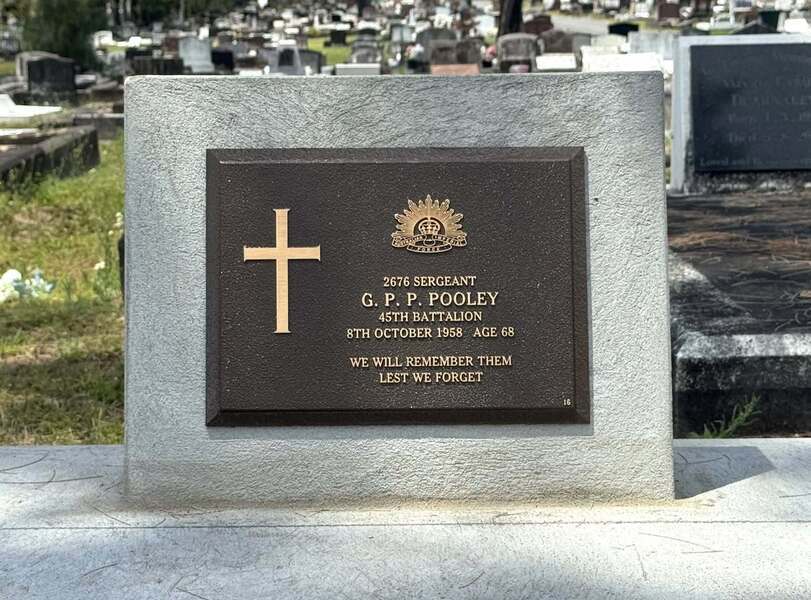
Sergeant George Picton Phillipps Pooley (Service No. 2676), an Australian World War One veteran, is one of the previously unmarked WWI veterans’ graves in Lutwyche Cemetery that has been accepted as Official Commemorations by the Office of Australian War Graves.
See Australian Remembrance Army Facebook page
George Picton Phillipps (also recorded as Phillip) Pooley was born on 28 October 1889 in Auckland, New Zealand, the son of Alfred Pooley and Maria Emily Margaret Pooley (née Phillipps). The family later moved to Sydney, where his younger sister Marie was born in 1895. He enlisted in the Australian Imperial Force at Liverpool, New South Wales, on 4 November 1914, giving his occupation as commercial traveller and nominating his sister Marie of Mount Colah as next of kin. He embarked from Sydney for overseas service aboard HMAT Runic on 9 August 1915.
Pooley joined the 13th Battalion and served at Gallipoli. After the evacuation, he disembarked at Alexandria in January 1916 and transferred to the 45th Battalion in March, proceeding to France for service on the Western Front.
During 1916, George Pooley was admitted to hospital several times and in August was wounded in action in France. After evacuation and treatment, he returned to duty with the 45th Battalion. In March 1917 he was again hospitalised and transferred to England, where he was posted to the 12th Training Battalion at Codford and later served with the 2nd Army School of Musketry.
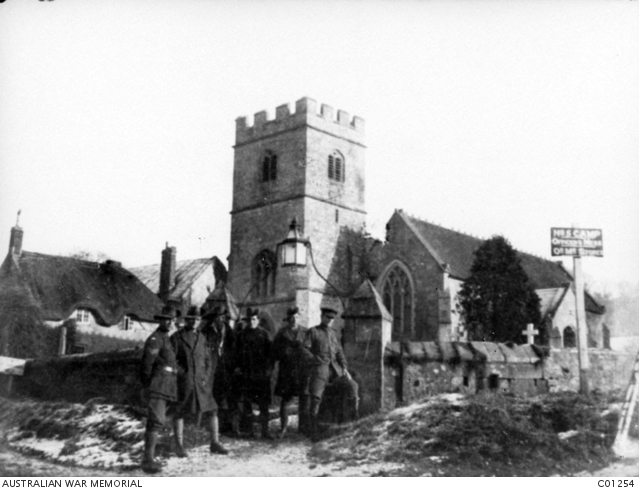
While in England he married Ethel Florence Chorley at Warminster, Wiltshire, in December 1917.
In January 1918, George returned to France and rejoined the 45th Battalion, serving there until the final stages of the war. In January 1920 he and his wife Ethel returned to Australia aboard SS Lucie Woermann, and he was discharged from the AIF on 24 March 1920.
After returning to Australia, George and Ethel lived in Sydney, where he worked as a commercial traveller. By 1929 the marriage had broken down and the couple divorced. He later settled in Brisbane, continuing in the same occupation.
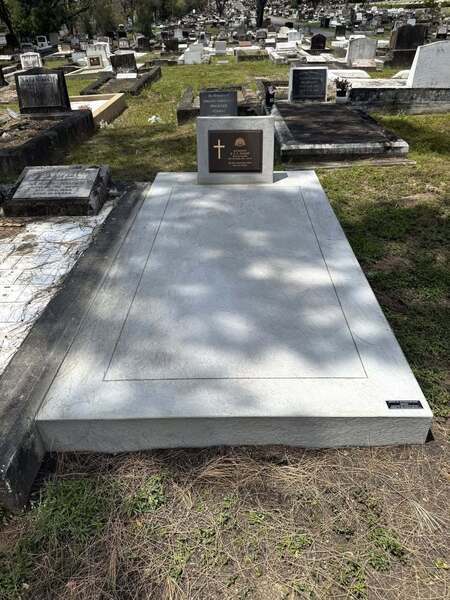
Sergeant George Picton Phillipps Pooley died at his home on Krupp Road, Cannon Hill, Brisbane, from heart failure on 8 October 1958, aged 68. He was buried in Monumental Portion 14 of Lutwyche Cemetery, Brisbane. He had no known children.
In 2024, sixty-six years after his death, we were notified that the Office of Australian War Graves had accepted our application for an Official War Graves Commemoration. After decades in an unmarked grave, his final resting place now bears a plaque commemorating his service to Australia — ensuring his name endures among those remembered for their duty and sacrifice.
His identity and dignity have now been restored.
Lest We Forget
Click images to start slideshow.