







PARKER, Lawrence James
| Service Number: | 1527 |
|---|---|
| Enlisted: | 22 April 1915 |
| Last Rank: | Corporal |
| Last Unit: | 2nd Pioneer Battalion |
| Born: | Glen Innes, New South Wales, Australia, 15 March 1886 |
| Home Town: | Glen Innes, Glen Innes Severn, New South Wales |
| Schooling: | Not yet discovered |
| Occupation: | Farrier |
| Died: | Brisbane, Queensland, Australia, 24 October 1953, aged 67 years, cause of death not yet discovered |
| Cemetery: |
Lutwyche Cemetery, Brisbane, Qld Anzac Portion 8 |
| Memorials: | Glen Innes & District Soldiers Memorial, Glen Innes District Roll of Honour |
World War 1 Service
| 22 Apr 1915: | Enlisted AIF WW1, Private, 1527, 20th Infantry Battalion | |
|---|---|---|
| 6 Jun 1915: | Involvement Private, 1527, 20th Infantry Battalion, --- :embarkation_roll: roll_number: '13' embarkation_place: Sydney embarkation_ship: HMAT Berrima embarkation_ship_number: A35 public_note: '' | |
| 6 Jun 1915: | Embarked Private, 1527, 20th Infantry Battalion, HMAT Berrima, Sydney | |
| 17 Oct 1919: | Honoured Military Medal, Montbrehain, 'During attack on MONTBREHAIN, north of ST. QUENTIN, on 5th October, 1918, he was N.C.O. in charge of stretcher bearers. Earlier in the day casualties occurred among the stretcher bearers. He stepped in and acted as a stretcher bearer making repeated trips to and from the R.A.P. through heavy barrages of shell and machine gun fire. He was wounded in the back but after having the projectile removed and anti-tetanus injection at the R.A.P. he returned to duty and carried out several other cases. His courage under fire and devotion to duty were beyond praise.' Source: 'Commonwealth Gazette' No. 119 | |
| 3 Feb 1920: | Discharged AIF WW1, Corporal, 1527, 2nd Pioneer Battalion, 2nd MD, Temp Sgt |
Help us honour Lawrence James Parker's service by contributing information, stories, and images so that they can be preserved for future generations.
Add my storyBiography contributed by Evan Evans
From Australian Remembrance Army
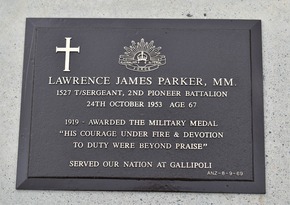
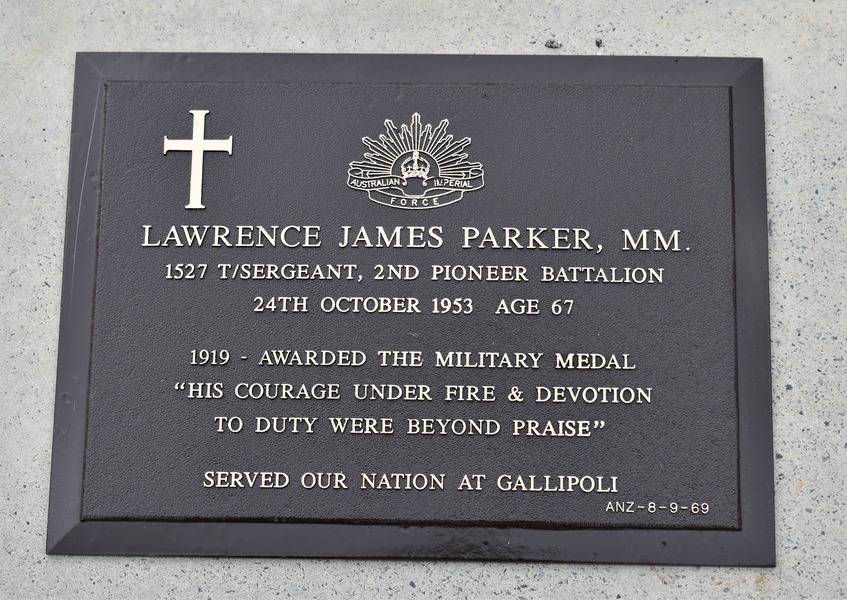
Temp. Sergeant Lawrence James Parker M.M. (Service No.1527), an Australian World War One veteran who was awarded the Military Medal for his courage under fire, is among almost 800 previously unmarked WWI veterans’ graves in Lutwyche Cemetery we have now marked with a plaque recognising their service for Australia.
We unveiled his plaque in Lutwyche Cemetery on 23 September 2023, along with a further 300 plaques on the previously unmarked graves of Australian World War One veterans located in Anzac Portion 8, Lutwyche Cemetery, Brisbane:
See Australian Remembrance Army Facebook page
Military Medal citation:
“During attack on Montbrehain, North of St. Quentin, on 5th October, 1918 he was N.C.O. in charge of stretcher bearers. Early in the day casualties occurred among the stretcher bearers. He stepped in and acted as a stretcher bearer making repeated trips to and from the R.A.P. through heavy barrages of shell and machine gun fire. He was wounded in the back but after having the projectile removed and anti-tetanus injection at the R.A.P. he returned to duty and carried out several other cases. His courage under fire and devotion to duty were beyond praise.”
Lawrence James Parker was born on 15 March 1886 at Glen Innes, New South Wales, the son of James Parker and Margaret Ann Parker (née Madden). He enlisted in the Australian Imperial Force at Liverpool, New South Wales, on 23 April 1915, stating his age as 29 and his occupation as farrier. After initial training at Broadmeadows Camp, he embarked from Sydney for overseas service on 6 June 1915 aboard HMAT Berrima. Following service in Egypt, he proceeded to Gallipoli in November 1915 and remained on the peninsula until the evacuation in December 1915, after which he returned to Egypt. He later transferred to the Western Front, arriving in France in March 1916, and served continuously in active operations throughout 1916, 1917 and 1918.
In July 1918, Parker was gassed while on active service, and on 5 October 1918 he was wounded in the back during the attack on Montbrehain, north of St Quentin. At that time, he in charge of stretcher bearers and, despite heavy casualties among them, repeatedly carried wounded men through intense shell and machine-gun fire. After receiving treatment, he returned to duty and continued evacuating casualties under fire. For his gallantry and devotion to duty on this occasion, he was awarded the Military Medal, gazetted on 12 December 1918. Parker was returned to Australia in 1919 and discharged from the Australian Imperial Force on medical grounds in February 1920.
After the war, Lawrence was living in Toowoomba, Queensland, where he worked as a farrier.
Temporary Sergeant Lawrence James Parker died on 24 October 1953, aged 67, and was buried in Anzac Portion 8, Lutwyche Cemetery, Brisbane. He was a single man who had no known children.
After decades without recognition at his place of burial, his grave now bears a plaque commemorating his service to Australia — ensuring his name endures among those remembered for their duty and sacrifice. His identity and dignity have now been restored.
We have remembered him.
Lest We Forget.
Click images to start slideshow.