








S23871
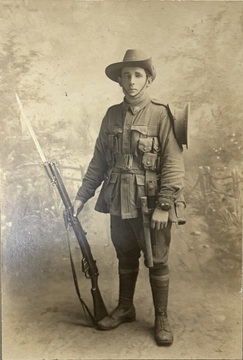
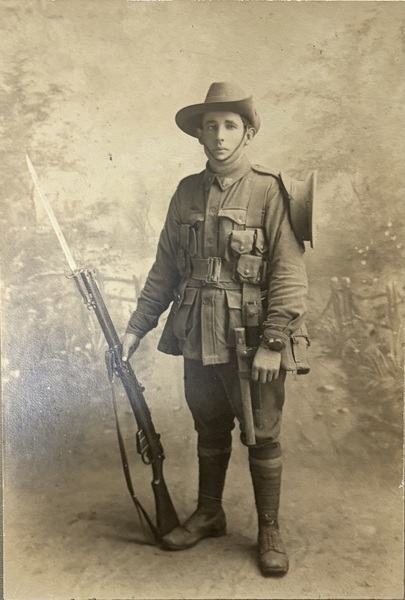
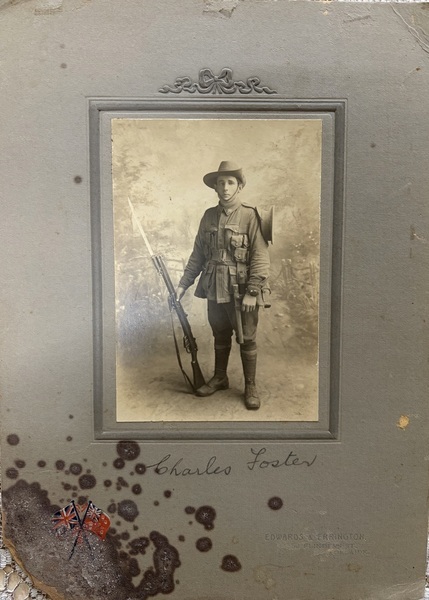
FOSTER, Charles Edward
| Service Numbers: | 2343, S212830 |
|---|---|
| Enlisted: | 31 March 1915, Keswick, South Australia, Australia |
| Last Rank: | Private |
| Last Unit: | 25 Garrison Battalion (SA) |
| Born: | Cunliffe, South Australia, 8 February 1889 |
| Home Town: | Port Lincoln, Port Lincoln, South Australia |
| Schooling: | Weetulta School, South Australia |
| Occupation: | Farmer |
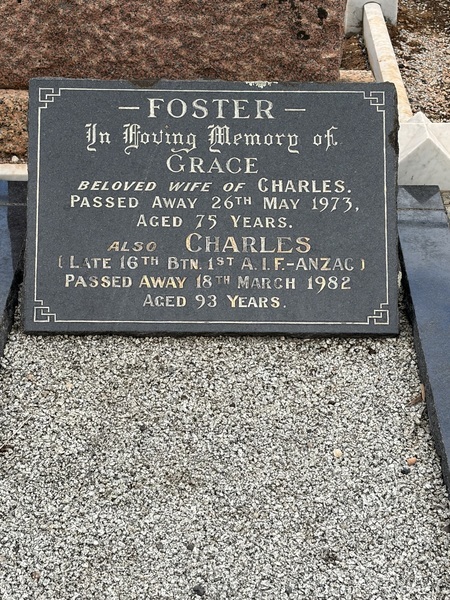
| Died: | Natural causes, North East Community Hospital, Campbelltown, South Australia, 18 March 1982, aged 93 years |
| Cemetery: |
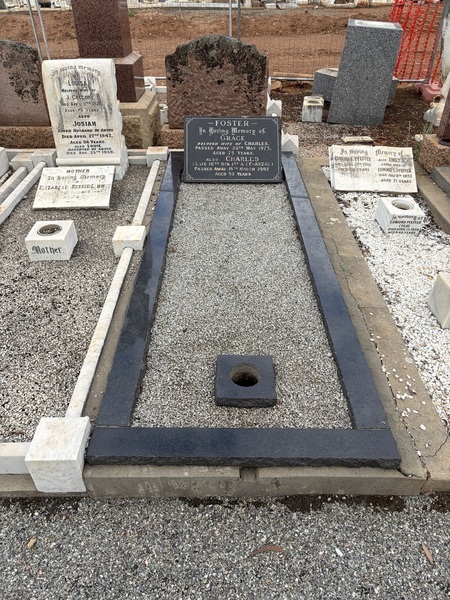
Payneham Cemetery, South Australia Section SE, Path 14, Site 403 |
| Memorials: | Ballarat Australian Ex-Prisoners of War Memorial, Port Lincoln & District Honor Roll WW1 |
World War 1 Service
| 31 Mar 1915: | Enlisted AIF WW1, Keswick, South Australia, Australia | |
|---|---|---|
| 24 Jun 1915: | Embarked AIF WW1, Private, 2343, 16th Infantry Battalion (WW1), HMAT Kanowna, Adelaide | |
| 24 Jun 1915: | Involvement AIF WW1, Private, 2343, 16th Infantry Battalion (WW1), --- :embarkation_roll: roll_number: '12' embarkation_place: Adelaide embarkation_ship: HMAT Kanowna embarkation_ship_number: A61 public_note: '' | |
| 11 Apr 1917: | Imprisoned Captured at Riencourt. Interned at Gefangendenlader, Limburg, Germany. Transferred to Friedichsfeld. Transferred to Head Camp Gustrow. Arrived England 30 December 1918. | |
| 11 Nov 1918: | Involvement AIF WW1, Lance Corporal, 2343, 16th Infantry Battalion (WW1) | |
| 22 Jul 1919: | Discharged AIF WW1 |
World War 2 Service
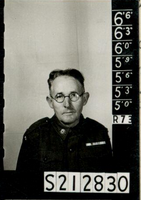
| 21 Jun 1940: | Enlisted Australian Military Forces (WW2) , Private, S212830, Keswick, SA | |
|---|---|---|
| 26 Jun 1943: | Discharged Australian Military Forces (WW2) , Private, S212830, 25 Garrison Battalion (SA) |
Help us honour Charles Edward Foster's service by contributing information, stories, and images so that they can be preserved for future generations.
Add my storyBiography contributed by Ann-Marie Bosco
Charles Edward (Charlie) Foster
On the 8th February 1889, Charles Edward Foster was born to William Foster and Ellen (Hellen) Creber at Cunliffe, York Peninsula, South Australia.
His Father was born in Essex England, and his Mother was born in Meadows, South Australia of Cornish parents. He was the fourth child out of seven children with four brothers and two sisters.
Charles was educated at Weetulta School, in the Church of Weetulta. He attained School Certificate at 11 years of age on 8th August 1900 and went to work on Father’s farm. He also used to cart stone to build a room onto the Weetulta Church.
He was not paid whilst working on the farm. The Weetulta property was sold and the family moved to Pine Point. They had wheat crops, cattle and horses – no motor vehicles. They cleared and fenced the land and there were plenty of wallabies and kangaroos in the area. His Father was not a good farmer and did not want to spend money on superphosphate when it was first brought to Australia from England. Charles used to cart wheat to Moonta – he was on the road at 3am ready for the 4 ½ mile trek with the team. At 9pm he would feed the horses before going to bed. He was once kicked by a horse on the forehead – a mark still evident all his life.
When Charles left Pine Point at the age of 19, he moved to Port Lincoln on yet another farm. They cleared 2,000 acres of scrubland. They ‘rolled’ and burnt the mallee. Horses pulled angle iron rollers and they never had a tractor. Charles also worked on the Port Lincoln wharf for a period unloading boats. One job also involved the trimming of rail sleepers. His wages were between £1 (pound) and £3 (pound) a week.
WAR TIME
Charles first saw Adelaide in 1915 at the Keswick Army Camp. He was there for a short while and then he was sent to Egypt. The group had never fired a shot with a rifle before they reached Egypt. There were some ‘roughies’ in the group who played up a bit, but the officers weren’t bad blokes. Charles joined up with the 16th Battalion on a Greek Island. They later landed at Anzac Cove, Gallipoli – they went to the trenches for 6 weeks. Charles can remember a bullet which struck the back of the trench between himself and his mate next to him. He saw many killed in France. Some were scared. Some had ‘shell shock’. He would never run anyone down for that as it was a dreadful experience. The Aussie troops were of all ages. He can remember brothers of 50 years old. At one stage, the troops went to guard the Suez Canal. Charles can remember riding a camel to make deliveries.
The British got up to some daring things like shifting German sea mines to confuse the enemy. The ANZACS would often do things without thinking of the consequences. The ‘Yanks’ were a mad lot – they were reckless and only fought in the areas where the enemy numbers were low. France was a ‘cow of a place’ – the Germans could see them in the distance, but there was never open fire or ‘all hell would open up’. After the War some of the troops picked spuds in the local area while waiting to come home.
In France the troops were ‘pinched’ or captured in 1917. They then went to the ‘wrong side of the line’ for the rest of the War.
Charles was wounded and captured by the Germans at Riencourt on the 11 April 1917, and interned at Gefangenenlager, Limburg, Germany. On a post card received from him dated 15 September 1917, it stated that he had been transferred to Friedrichsfeld. He was moved yet again as on 7 February 1918 he advised that he was now interned at Head Camp Gustrow and that “I am quite well”. On another letter dated 5 June 1918, he advised “I am quite well and getting my parcels fairly regularly now.”
They used to cook and eat ‘stinging nettles’ when working as P.O.W.’s in the fields. One of the Aussie chaps abused a German officer, but the German understood English and was angered….. ‘The bloke shut-up quick’. German soldiers weren’t so bad – they gave the prisoners a ‘fair-go’.
He was in the P.O.W. camp in Germany for 20 months. Finally on 30 December 1918 he arrived at Ripon, England. On 31 March 1919, he left Liverpool for Australia on the “Kyber” and disembarked at Adelaide on 9 May 1919. He was discharged on 22 July 1919.
At the time of the War, he was strongly anti-conscription and believed the volunteer forces were adequate. Besides, he didn’t want to see anybody go through the mess of the War.
ON RETURN
Charles returned to Cook Street, Payneham, South Australia. His Father had died 3 January 1919 after the War finished while he was in London.
Charles married Mary Elizabeth Grace (Grace) Firth on the 26th April 1924, at All Souls’ Anglican Church, St. Peters Adelaide. He was 35 years of age and Mary was 26 years of age.
His Mother died in 1927 at 63 years of age. Charles worked at Richards Motor Company at the Showgrounds, and then later near the Brewery on Port Road.
He worked at the Outer Harbour Wharf to help build a steam roller for road making. He later worked for General Motors, then back to Richards and he worked for Studebakers. His first car was a ‘silly lookin’ Rover’. After World War 11, you could have got a new Chev for £200 (equivalent to $400). Charles was earning £3.17.6 (equivalent to $7.75) when he built his home at St. Morris. The most he ever earned was £13 per week (equivalent to $26). He can remember 3d. (3 pence = 3 cents) per loaf of bread and one 1/5d. (one shilling & five pence = 15 cents) for a pound of butter and 2d. (2 pence = 2 cents) or 3d. (3 pence = 3 cents) for pies and pasties.
FINAL QUOTE
(referring to certain past experiences) “You don’t take any notice of it at them times….you think a lot since though”.
Grace passed away on 26 May 1973, and Charles passed away on 18 March 1982. They are both buried in the Payneham Cemetery, Adelaide.
Source: “From Kelvedon to South Australia” by Ngaire Merrifield. Published 2015
Click images to start slideshow.