








19668
BACKHOUSE, Cecil Vivian
| Service Numbers: | 6213, S213351 |
|---|---|
| Enlisted: | 27 May 1940, Wayville, SA |
| Last Rank: | Corporal |
| Last Unit: | 10th Infantry Battalion |
| Born: | Adelaide, SA, 31 July 1894 |
| Home Town: | Prospect (SA), Prospect, South Australia |
| Schooling: | Not yet discovered |
| Occupation: | Clerk |
| Died: | Adelaide, South Australia, 30 August 1957, aged 63 years, cause of death not yet discovered |
| Cemetery: | Not yet discovered |
| Memorials: | Keswick Prospect Methodist Sunday School Honour Board WW1, North Adelaide Public School Roll of Honor, Prospect Roll of Honour A-G WWI Board, Prospect St Cuthbert's Church Honour Board |
World War 1 Service
| 28 Aug 1916: | Embarked Private, 6213, 10th Infantry Battalion, HMAT Anchises, Adelaide | |
|---|---|---|
| 28 Aug 1916: | Involvement Private, 6213, 10th Infantry Battalion, --- :embarkation_roll: roll_number: '10' embarkation_place: Adelaide embarkation_ship: HMAT Anchises embarkation_ship_number: A68 public_note: '' | |
| 11 Nov 1918: | Involvement Private, 6213 |
World War 2 Service
| 27 May 1940: | Involvement Corporal, S213351 | |
|---|---|---|
| 27 May 1940: | Enlisted Australian Military Forces (WW2) , Corporal, S213351 | |
| 27 May 1940: | Enlisted Wayville, SA | |
| 18 Jun 1943: | Discharged |
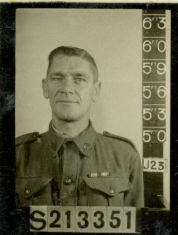
Cecil Vivian Backhouse A Veteran Who Served Australia Twice
Some men answer the call once. Cecil Vivian Backhouse answered it twice.
Cecil first served his country in the First World War as Private 6213 with the famed 10th Battalion AIF, embarking from Adelaide in 1916. Like many of his generation, he endured a war that changed the world and returned home carrying the quiet weight of service. (NAA, 2026)
More than two decades later, with another global conflict unfolding, Cecil again stepped forward.
His National Archives record confirms a second period of service during the Second World War. By then he was no inexperienced recruit. He was a mature Australian, part of a generation of veterans whose leadership, calmness and hard-earned perspective were deeply valuable to a nation once again preparing for war.
Australia in the early 1940s faced genuine uncertainty. The Pacific conflict moved closer to home, Singapore had fallen, Darwin had been bombed, and the nation was mobilising quickly. Men like Cecil helped steady that mobilisation. Whether in training, administration, home defence or support roles, their contribution was essential. Armies do not function on the front line alone — they rely on discipline, organisation and people willing to serve wherever needed. (AWM,2026)
That is what makes Cecil Vivian Backhouse’s story worth remembering.
He was not simply a man with two service records. He represented duty across generations — first as a young soldier of the Great War, then as an older man willing to stand up again when Australia faced danger a second time.
There is something deeply Australian in that kind of service: no fuss, no noise, no demand for recognition — just stepping forward when asked.
Cecil died in Adelaide in 1957. His legacy is one of resilience, loyalty and uncommon commitment.
He served in one world war. Then, when called again, he served in another.
Lest we forget.
Submitted 29 April 2026 by Adam Luscombe
Cecil Vivian Backhouse-Private, 6213 — 10th Infantry Battalion, AIF
Cecil Vivian Backhouse was born in Adelaide, South Australia, on 31 July 1893. Before enlistment he was recorded as a clerk, with Mount Gambier also connected to his hometown story. He served in the First World War as Private 6213 with the 10th Infantry Battalion, one of South Australia’s great AIF battalions. (VWMA, 2026)
On 28 August 1916, Cecil embarked from Adelaide aboard HMAT Anchises A68 as a reinforcement for the 10th Battalion. His service placed him within a unit already carrying a formidable reputation: raised in Adelaide, known as “The Adelaide Rifles,” and part of the 3rd Brigade, 1st Division, AIF. (VWMA, 2026)
By the time Cecil joined the battalion overseas, the 10th had already served at Gallipoli and had moved to the Western Front. In France and Belgium, the battalion fought through some of the hardest Australian actions of the war, including Pozières, Mouquet Farm, Bullecourt, Menin Road, Merris, Amiens and the Hindenburg Line. The battalion suffered heavily at Pozières, with around 350 casualties, and later fought through the great Allied advances of 1918. (AWM, 2026)
Cecil’s service continued through to the end of the war. His record notes him still involved as a private on 11 November 1918, the day the Armistice ended the fighting on the Western Front. Unlike so many of his generation, Cecil returned home. He died in Adelaide on 30 August 1957, aged 64. (NAA,2026)
Cecil Vivian Backhouse’s story is one of steady service rather than public decoration. He was one of the thousands of South Australian men who left home, crossed the world, and served in a battalion whose name became deeply woven into the military history of this state. His name deserves to be remembered not only as a number on a roll, but as a man who carried his part of Australia’s burden in the Great War.
Lest we forget.
Submitted 29 April 2026 by Adam Luscombe


Click images to start slideshow.