







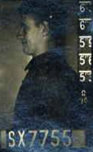
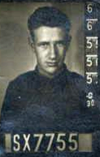
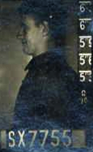
KEEGAN, James
| Service Number: | SX7755 |
|---|---|
| Enlisted: | 4 July 1940, Adelaide, SA |
| Last Rank: | Private |
| Last Unit: | 2nd/48th Infantry Battalion |
| Born: | Mount Colliery, Queensland, Australia, 2 June 1918 |
| Home Town: | Adelaide, South Australia |
| Schooling: | Alberton School, South Australia |
| Occupation: | Engine Driver |
| Died: | 7 July 1990, aged 72 years, cause of death not yet discovered, place of death not yet discovered |
| Cemetery: |
Pinnaroo Lawn Cemetery & Crematorium, QLD Plot 6 ANZ 283 |
| Memorials: |
World War 2 Service
| 4 Jul 1940: | Involvement Private, SX7755 | |
|---|---|---|
| 4 Jul 1940: | Enlisted Adelaide, SA | |
| 4 Jul 1940: | Enlisted Australian Military Forces (WW2) , Private, SX7755 | |
| 22 Jul 1940: | Enlisted Australian Military Forces (WW2) , 2nd/48th Infantry Battalion | |
| 22 Mar 1945: | Discharged | |
| 22 Mar 1945: | Discharged Australian Military Forces (WW2) , Private, SX7755 |
‘In His Presence There is Love.’
James was born in a rural town, Mount Collery in Queensland, on the 2nd June 1918. He was the middle child of Henrietta Anne and James Keegan. His siblings included an older sister, Vera May and younger brother Thomas Joseph. James Snr initially worked as a labourer for the City Council of Bundamba.
The family lived in a small cottage at Bergin’s Hill, Bundamba, a suburb of Ipswich on the Bremer River. James Jnr. was just seven when their three-bedroom cottage burnt down during the early hours of January ’26, with the fire possibly starting in the kitchen. (Unfortunately, following an argument James Snr had chosen to camp in the local quarry over the previous week so was not present to help.) The family moved from one state to another as James Snr sought labouring work ‘following the plough’.
The family moved to live in Clare Street, Portland with the children attending the Alberton School but the relationship continued to be extremely strained with Henrietta taking James to Court for failing to provide her and the children adequate financial support. At that stage Vera was 11, James 9 and Thomas 6. Henrietta had consequently set up a boarding house and taken in sewing to generate some income. However, she gave up this safety-net of an income at James’ Snr’s request but was unable to support her children on the 30/- provided her. Subsequently three of the four were placed in the Largs St Jospeh’s Orphanage in 1928. The oldest daughter, Vera stayed with her mother. (At a tumultuous trial Henrietta shared that in 20 years of marriage the family had lived in forty different houses.)
Post school, James became an engine driver, but a month after his 22nd birthday he enlisted to serve in WWII on the 1st June ’40 as SX7755, giving only his first name, James. Initially he gave only his mother, Henrietta’s address in Fitzroy, Melbourne as his next of kin but later added his Croydon, SA based father, James.
(James’ younger brother, Thomas initially served with the Militia as S38021 in the 48th Battalion. He enlisted two years after James in July ’42 as SX22174, serving in the 25th Garrison Battalion at Loveday. He had a ‘colourful’ service with numerous fines and detentions for being AWL and disobeying commands. He concluded his army time with service in the 2/43rd in New Guinea and Borneo before being discharged on the 21st March ’46.)
James was placed in the 2/48th Battalion, undertaking training at Wayville until awarded pre-embarkation leave prior to boarding the Stratheden on the 7th November, arriving in the Middle East on the 17th December. The young men then completed a few months’ training in Cyrenaica before heading to Tobruk at the start of April 1941 where the dust, flies, heat, minimal water supplies and constant bombardment were quite a challenge to these fresh new enlistees.
Unfortunately, just weeks after arriving in the Middle East James was confined to barracks for three days for non-attendance at Parade. This was to become a regular feature of his service. James was to also become one of the famed Rats of Tobruk, a term of derision that was quickly adopted as an unofficial badge of pride by the troops.
Over July James experienced bunions and painful problems with his big toe (Hallux Valgus) exacerbated by excessive marching. He eventually returned to his battalion in December, but within a few weeks was again confined to barracks and forfeited a day’s pay for being AWL. Just two months later he received a heavy punishment of 14 days confined to barracks for having previously broken out of barracks. By August James was suffering from Dysentery, returning to the 2/48th at the commencement of October. Fortune was not with James, wounded in action on the 23rd October ’42 at El Alamein, sustaining a gunshot wound to his leg. At the time James was involved in the attack on El Alamein and Trig 29. John Glenn in ‘Tobruk to Tarakan’ gave an insight into the conditions where in the fading light, two German commanding officers were captured from a forward patrol around Trig 29. The maps they were carrying proved invaluable, showing no mines in the area under which the battalion was advancing.
However, Glenn recorded that the 2/48th advanced on the German held Trig 29 under heavy mortar and artillery fire. He added, ‘The men, with eyes stinging from cordite and dust gazed westward for signs of the enemy, but the battalion came under heavy fire from artillery, mortar and machine guns’ emanating from rig 29, which overlooked the battalion position. Private Jack Ralla recalled the earth-shattering noise, commenting that “As much as you felt like going to ground you just kept plugging on. I kept thinking the next shell could have my number on it. You could smell them gong past.” During this seeming chaos, James was wounded.
Back home the November ’42 issue of the Advertiser published a list of those wounded. From the 2/48th included Wounded in Action And Placed On Dangerously Ill list SX13203 Pte. Thomas Brierley. Adelaide. SX8282 Pte. James R. L. Cooper, Auburn. Wounded In Action SX7147 Pte. Harold W. Gass. Mannum and SX7755 Pte. J. Keegan. Adelaide.
On return to his battalion, James’ absentee times accelerated to a week, inevitably forfeiting over a month’s pay. It was more than fortuitous that, finally, his battalion was returning to Australia via Melbourne in February ’43. Training in Queensland followed to prepare the troops to face a very different enemy in the tropical conditions of New Guinea. He arrived at Milne Bay early in August ’44 but by October had contracted malaria, which continued to occur, causing his return to Brisbane for more treatment. James’ conduct and language to superiors were inevitably punished. Despite returning to Adelaide, malaria continued to reoccur as did a diagnosis of deafness and finally his discharge on the 22nd March ’45.
James married Norah Josephine Cunningham, a talented musician in the St. Augustine's Church, Coff's Harbour with a reception held at the School of Arts. The two celebrated their honeymoon in Sydney, Melbourne and Adelaide.
Aged 72, James died on the 7th July 1990. His service is honoured in the Pinnaroo Lawn Cemetery and Crematorium, Queensland. The inscription reads ‘In His Presence There is Love.’
Nora lived to be 92 and died on the 18th October 2013. Nearby are remains and those of their son, James Francis who, as an 18-year-old, was killed in a work accident on the 17th October 1973.
Researched and written by Kaye Lee, daughter of Bryan Holmes SX8133, 2/48th Battalion.
Submitted 30 March 2026 by Kaye Lee
Click images to start slideshow.