







THOMPSON, Clifford Charles
| Service Number: | SX4650 |
|---|---|
| Enlisted: | 8 June 1940, Adelaide, South Australia |
| Last Rank: | Private |
| Last Unit: | 2nd/48th Infantry Battalion |
| Born: | Adelaide, South Australia, 25 August 1919 |
| Home Town: | Thebarton (Southwark), City of West Torrens, South Australia |
| Schooling: | Not yet discovered |
| Occupation: | Labourer |
| Died: | 5 February 1997, aged 77 years, cause of death not yet discovered, place of death not yet discovered |
| Cemetery: |
Enfield Memorial Park, South Australia Cremated remains later returned to family. |
| Memorials: |
World War 2 Service
| 8 Jun 1940: | Enlisted Private, SX4650, Adelaide, South Australia | |
|---|---|---|
| 8 Jun 1940: | Enlisted Australian Military Forces (WW2) , Private, SX4650, 2nd/48th Infantry Battalion | |
| 9 Jun 1940: | Involvement Private, SX4650 | |
| 13 Nov 1945: | Discharged Private, SX4650, 2nd/48th Infantry Battalion | |
| 13 Nov 1945: | Discharged Australian Military Forces (WW2) , Private, SX4650, 2nd/48th Infantry Battalion |
We Will Remember Him.
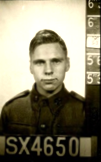
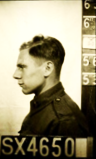
Clifford Charles was born on the 25th August 1919 and named after his father, Charles Edward. The family lived at Chapel Street in Thebarton. Charles, a labourer worked at the Abattoirs at Pooraka, loading lorries for various butchers. Post school, Cliff also worked as a labourer until the outbreak of WWII.
Aged 20, he enlisted on the 8th June ’40 and was allocated the number SX4650 and was initially placed in the 2/3rd Field Company. During the intensive training undertaken at Woodside in the Adelaide Hills, he was quickly transferred to the newly formed 2/48th Battalion.
Following pre-embarkation leave, Cliff was soon sailing on the Stratheden on the 7th November, arriving in the Middle East on the 17th December. Facing quite different conditions to those back home, the dust, flies and desert all contributed to Cliff contracting pharyngitis while in Gaza, causing him to spend a fortnight recovering in hospital.
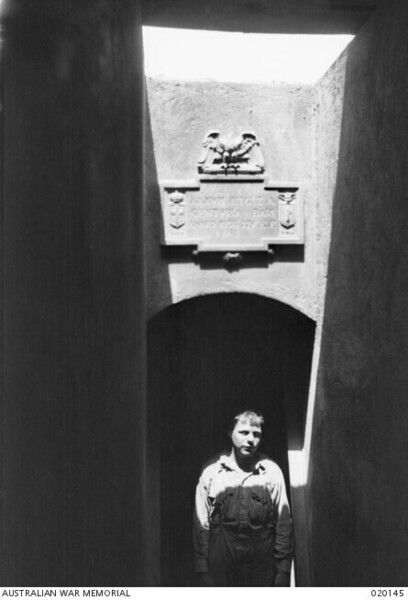
He was to become one of the famed Rats of Tobruk, an unofficial term initially designed to destroy the morale of Allied soldiers who were living in primitive, dusty, fly and rat-infested conditions – like rats. Enemy bomber dropped leaflets encouraging the men to surrender. They did the opposite, earning huge, lasting accolades for their bravery and attitude of ‘No Surrender’.
By January ’42, Cliff paid dearly for leaving his barracks without permission, receiving a week of field punishment and losing all pay for that time. Mid-year he again contracted pharyngitis, followed by tonsilitis, giving an indication of his health status and the primitive conditions under which the men fought and survived. Soon after returning to his battalion from recuperating, Cliff pushed the boundaries of expected behaviour and was again fined.
By October that year, Cliff was involved in the intense fighting underway at the railway line near Ring Contour 25 where several officers were wounded. SX10325 Captain Peter Robbins’ company was reduced to just 16 men. Flares had lit up the advancing survivors of D Company resulting in an horrific attack from Spandaus. In Darren Paech’s book, ‘Adelaide to Alamein’, he quotes 23-year-old Private Cliff Thompson that ‘At first it came in waist high, but when we went to ground like wet sacks, they sent the stuff skimming just over the ground.’ He added ‘The survivors had nowhere to go. We were all over the show and badly cut up. Unless we could be got together and wipe those Jerries off the ridge, they were certain to wipe us out. The Germans’ machine gunners had easy targets and were cooly picking off the Australians one by one with sustained bursts of fire.’
Sergeant Bill Kibby then took charge, leading a two-pronged assault against the German positions. One group of about five men, including Private Thompson, moved to the left, and Kibby, leading the second group himself, went right. The left-hand post was destroyed with grenades.
As was the respect for their fallen mates, just days later Private Cliff Thompson of D Company was part of a small group who went looking for the bodies of their fallen mates. Captain Peter Robbins, SX7089 Sergeant Bill Kibby and the other members of D Company who had been killed in the final stages during the attack on Ring Contour 25 It took 10 days before they were found as the Germans usually buried the men in a shallow trench and covered them over. They were all lying together in one grave. The bodies were recovered and buried in a row, Bill Kibby, Peter Robbins, SX8344 Rod Ide, SX7987 Doug Whyte, SX8385 Chuck Fowler with SX9488 Eric Montgomery just behind. Cliff and his mates knew If it hadn’t been for Bill Kibby they also might have been lying there with the others.
In checking the bodies of their mates, Cliff found a letter in Captain Peter Robbins’ pocket, recommending Sergeant Bill Kibby for a Distinguished Conduct Medal. This was posthumously awarded as a Victoria Cross for the selfless manner in which Bill lost his life.
With so much fighting, hardship and loss of mates, finally Cliff and the remaining members of the Battalion were heading home to Australia. Rumours had abounded about possible dates but finally they boarded on the 1st February ’43 the ship headed for Melbourne. Back in Adelaide both the Advertiser and Border Watch both carried an article titled ‘Inspiration of Sgt. Kibby’ written by War Correspondent (and later renown poet) Kenneth Slessor. In part it read that Tom Martin, coach painter, from Bowden, South Australia, and Cliff Thompson, who worked at the Abattoirs, South Australia, were in Kibby's platoon. Each is 22, diffident and shy to speak. They went to the Middle East with Kibby as original members of the battalion, almost two and a half years ago. "Everyone in the company had a good word for Kibby" said Thompson. "He treated the boys in his platoon like a bunch of young brothers. He was always fighting to make things better for us, always fussing around, keeping things going, cheering us up and full of jokes. And when we were in action be never missed visiting the section posts, no matter how far apart or how much stuff was flying about."
The temptation for Cliff to enjoy extra leave while back in Australia was met by the loss of a further two day’s pay and yet another fine.
His battalion headed to Queensland to train in the Atherton Tablelands, preparing for warfare in the tropical conditions of New Guinea and against a very different enemy. Cliff disembarked in Milne Bay in August ’43 but just over a week after his arrival, he was a non-attendant at parade, inevitably being confined to barracks for four days. Again, his health gave an indication of the conditions as he contracted an extremely high temperature (Pyrexia of Unknown Origin) and malaria over October and January ’44, then into February, causing him to be evacuated in a ship’s hospital and thence to a Queensland hospital. As had become his routine, on discharge in April ’44 Cliff went AWL, but this time for an extensive time of a fortnight, with the inevitable result of a fine and further loss of pay.
Ill health again struck over July and August of high temperatures, upper respiratory tract infections and malaria. Not unexpectedly, September was marred with several offences of lack of attendances at parade, being beyond designated limits without correct paperwork and disobeying orders were met with a further fortnight of field punishment and the inevitable loss of pay.
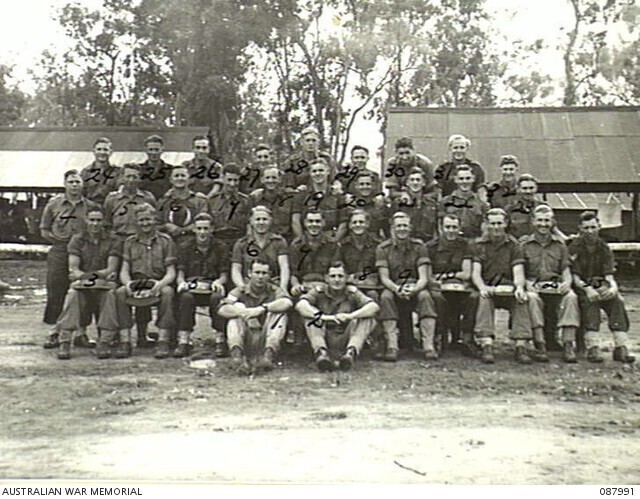
In the closing days of the war Cliff returned to Morotai and Tarakan whist still being affected by chest infections. March ’45 was marked by the usual offences with the added charges of being drunk, poor language to his superiors – and the customary fines and being confined to barracks awarded. At last he returned to South Australia with the long awaited discharge on the 13th November, ’45. He was one of the few who had been with the 2/48th from the beginning at Tobruk to the end at Tarakan. He had earned the 1939/45 Star, African Star, Pacific Star, Defence Medal, War Medal and Australian Service Medal.
By 1982 Cliff was living at the War Veterans Home at Myrtlebank where he enquired about gaining the eighth Army Clasp. Having survived through incredible conflict, little is recorded of Cliff’s mental health at the time.
Aged 77 he died on the 5th February ’97. He was buried at the Enfield Memorial Park, but later his cremated remains were returned to the family.
Researched and written by Kaye Lee, daughter of Bryan Holmes SX8133, 2/48th Battalion.
Submitted 2 December 2025 by Kaye Lee




Click images to start slideshow.