







CHAPMAN, Rodney Stewart
| Service Number: | 4721369 |
|---|---|
| Enlisted: | Not yet discovered |
| Last Rank: | Private |
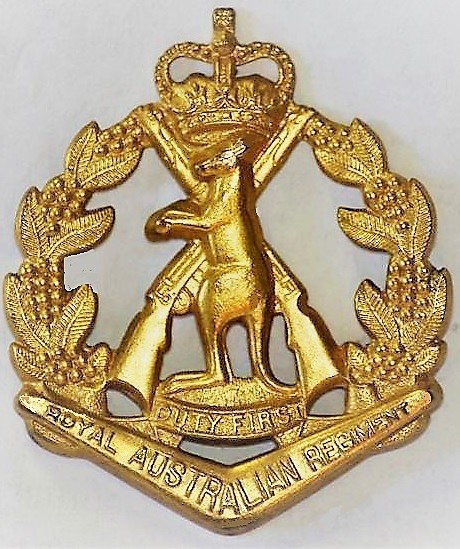
| Last Unit: | 2nd Battalion, The Royal Australian Regiment (2 RAR) |
| Born: | Adelaide, South Australia, 3 October 1948 |
| Home Town: | Glenelg, Holdfast Bay, South Australia |
| Schooling: | Not yet discovered |
| Occupation: | Bookbinder |
| Died: | Illness, South Vietnam, South Vietnam, Vietnam, 28 April 1971, aged 22 years |
| Cemetery: |
Centennial Park Cemetery, South Australia Derrick Gardens Path 20 Site 42B, |
| Memorials: | Adelaide Pathway of Honour - 2nd Battalion, The Royal Australian Regiment , Adelaide Post Second World War Memorial, Adelaide Vietnam War Memorial, Australian War Memorial Roll of Honour, Grafton Clarence Valley Vietnam Veterans Memorial, Hilton Australia's National Servicemen Memorial, Kallangur Vietnam Veterans' Place, Pooraka War Memorial, Port Pirie Vietnam Veterans Honour Wall, Seymour Vietnam Veterans Commemorative Walk Roll of Honour, Wollongong Vietnam Memorial |
Vietnam War Service
| 1 Jul 1962: | Involvement Private, 4721369 | |
|---|---|---|
| 20 Aug 1970: | Involvement Australian Army (Post WW2), Private, 4721369, 1st Australian Reinforcement Unit, Vietnam | |
| 20 Aug 1970: | Involvement Australian Army (Post WW2), Private | |
| 18 Sep 1970: | Involvement Australian Army (Post WW2), Private, 4721369, 2nd Battalion, The Royal Australian Regiment (2 RAR) | |
| 18 Sep 1970: | Involvement Australian Army (Post WW2), Private | |
| Date unknown: | Involvement |
Help us honour Rodney Stewart Chapman's service by contributing information, stories, and images so that they can be preserved for future generations.
Add my storyBiography
Birth: Oct. 3, 1948
Adelaide
South Australia, Australia
Death: Apr. 28, 1971
Ba Ria-Vung Tau, Vietnam
4721369 Private Rodney Stewart Chapman, 2nd Battalion, Royal Australian Regiment, Age 22 from Glenelg SA. Chapman completed a unit drivers course and was employed as a driver when he died of an Illness at 1st Field Hospital, Vung Tau, 28th April 1971
Infomation from Find a Grave Memorial
Name
Chapman , Rodney Stewart
Service Army
Service Number 4721369
Rank Private
Date of Birth 03 10 1948
Place of Birth Adelaide S.A.
Date of Intake 0/1/1970
NS Training 2 RTB
Follow Up Training 2 RAR Royal Australian Infantry Corps
Basic Training Puckapunyal
Next of Kin at time of Service Mr & Mrs Chapman
Operational Service Vietnam
Medals AASM / Vietnam Campaign Medal / ADM / ANSM / South Vietnam Star
Information from Nominal Roll of Nashos
Biography contributed by Rod Hutchings
Home was close when Private Rodney Stewart Chapman died.
He had served in South Vietnam with the 2nd Battalion, The Royal Australian Regiment, and his battalion was only weeks from returning to Australia. Rodney did not die in a firefight or on a mined road. He died from illness at the 1st Field Hospital in Vung Tau on 28 April 1971, aged twenty-two.
Rodney was a South Australian. He was born in Adelaide on 3 October 1948 and came from Glenelg, the seaside district where Adelaide meets the water. Before the Army, he worked as a bookbinder.
That small civilian detail matters.
Bookbinding is careful work. It asks for patience, order, good hands, and a respect for things made to last. The public record does not tell us what kind of books Rodney handled, or whether he saw the trade as a lifelong craft or simply the beginning of working life. But it does tell us that before the Army knew him by rank and number, he was a young tradesman from Glenelg with a practical skill and a civilian future ahead of him.
Then National Service changed the course of his life.
Rodney was called up in the January 1970 intake under the National Service scheme. Like many young men of his generation, he did not enter the Vietnam War through a long-held military ambition. The ballot found him. He trained at 2nd Recruit Training Battalion, Puckapunyal, and was allocated to the Royal Australian Infantry Corps before joining 2 RAR.
With two New Zealand companies attached, the battalion served in Vietnam as 2 RAR/NZ (ANZAC), based at Nui Dat in Phuoc Tuy Province. Rodney completed a unit driver’s course and served as a driver during his deployment.
That role should not be mistaken for something safe or secondary.
A battalion in Vietnam lived by movement. Vehicles carried food, water, ammunition, stores, mail, equipment, and men. They kept forward positions supplied and linked Nui Dat with the wider task force area. But the roads and tracks of Phuoc Tuy carried their own danger. Mines and ambushes were part of the driver’s war. The infantryman on foot watched the tree line. The driver watched the road.
Rodney’s work required reliability. The same kind of care that belonged in a bookbinding workshop was needed in the dust, humidity, and heat of Vietnam, where a vehicle had to be checked, serviced, loaded, driven, and brought back again. A missed fault could matter. A road decision could matter. A driver carried more than cargo.
He carried trust.
The climate of South Vietnam wore men down. The wet season turned tracks to mud. The dry season put dust into engines, clothing, and lungs. Soldiers lived with heat, insects, tropical disease, anti-malarial tablets, exhaustion, and the strain of knowing that ordinary movement could turn dangerous without warning.
In April 1971, Rodney was admitted to the 1st Field Hospital at Vung Tau. He died there on 28 April. His cause of death was recorded as illness.
He was returned to South Australia and buried at Centennial Park Cemetery, in the Derrick Gardens, Path 20, Site 42B. His name is recorded on Panel 5 of the Roll of Honour at the Australian War Memorial in Canberra.
The record is quiet about Rodney’s voice, his humour, his friendships, and the private grief of Mr and Mrs Chapman. It does not tell us what he hoped to do after Vietnam, or what he would have made of the years denied to him.
But it tells us enough to honour him properly.
Rodney Stewart Chapman was a bookbinder from Glenelg, a National Serviceman, an infantry soldier, and a unit driver with 2 RAR/NZ (ANZAC). He did the work asked of him in Vietnam and died just before home came back into reach.
He was twenty-two.
Rod Hutchings
Director, Virtual War Memorial Australia


Click images to start slideshow.