



S18547
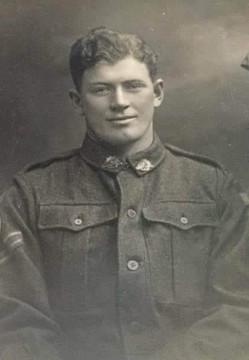
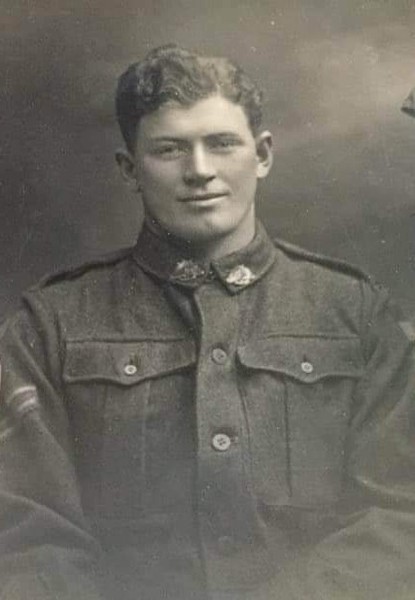
CUNNINGHAM, Ross William Jack
| Service Number: | 48 |
|---|---|
| Enlisted: | 8 November 1915, Adelaide, SA |
| Last Rank: | Lance Corporal |
| Last Unit: | 10th Infantry Battalion |
| Born: | Broken Hill, NSW, 30 September 1894 |
| Home Town: | Mambray Creek, Mount Remarkable, South Australia |
| Schooling: | Not yet discovered |
| Occupation: | Colt Breaker |
| Died: | 1 December 1977, aged 83 years, cause of death not yet discovered, place of death not yet discovered |
| Cemetery: |
Centennial Park Cemetery, South Australia RSL Walls |
| Memorials: | Gawler Council Gawler Men Who Answered the Call WW1 Roll of Honor, Port Germein War Memorial |
World War 1 Service
| 8 Nov 1915: | Enlisted AIF WW1, Private, 48, 43rd Infantry Battalion, Adelaide, SA | |
|---|---|---|
| 9 Jun 1916: | Involvement Private, 48, 43rd Infantry Battalion, --- :embarkation_roll: roll_number: '18' embarkation_place: Adelaide embarkation_ship: HMAT Afric embarkation_ship_number: A19 public_note: '' | |
| 9 Jun 1916: | Embarked Private, 48, 43rd Infantry Battalion, HMAT Afric, Adelaide | |
| 11 Nov 1918: | Involvement Lance Corporal, 48, 10th Infantry Battalion | |
| Date unknown: | Wounded 48, 10th Infantry Battalion |
Help us honour Ross William Jack Cunningham's service by contributing information, stories, and images so that they can be preserved for future generations.
Add my storyBiography contributed by St Ignatius' College
Ross William Jack Cunningham was born on the 30th of September 1894 in Broken Hill, New South Wales. Cunningham was the son of Mrs Frannie Cunningham. Before the war he was not married. Before the war he worked as a colt breaker and his religious belief was Roman Catholic. In his attestation paper Cunningham was described as having a fresh complexion, with blue eyes and auburn hair.
Cunningham enlisted for World War 1 on the 8th of November 1915 in Adelaide, South Australia. He embarked from Adelaide on the HMAT A19 Afric on the 9th of June 1916. His regimental number was 48 and he originally joined in the 43rd battalion. His rank was private which was the lowest military rank but later he was promoted up a rank to Lance Corporal. With his battalion, he fought in the battle of the Pozieres from the 23rd of July to the 7th of August 1916.
On the 30th of August 1916 he was absent without leave from 9am from 7am, which awarded him 21 days field punishment and loss of 6 days’ pay. He moved to the 10th battalion on the 2nd of October 1916. On the 12th of April 1917 he was admitted to hospital because of getting shot in the shoulders and head in the field. While he was in hospital his battalion were doing brigade support. He was given medical attention on Ambulance Train No.36 to get his leg incised, cleaned and treated on the 5th of September 1917. During that time his battalion was doing training.
On the 6th of September 1917 he was admitted to hospital for an infected right leg. In December he went on leave to the United Kingdom from the 22nd until the 8th of January. While he was on leave his battalion had their position taken over by the 12th battalion, and they had all men do labour, and on the 1st of January to the 8th his battalion would stay in the front line.
He was admitted to hospital because of an infected left thumb on the 14th of March 1918. Soon after on the 27th of March 1918 he was transferred to the 2nd Causality Clearing station and the day after was admitted back to hospital because of a septic thumb. The day after he transferred to a hospital, he was sent to the Australian rest station however on the 30th of March 1918 he went back to hospital for a septic left thumb in Boulogne. On the 19th of April he went to the 2nd General Hospital, then a bit later, on the 24th of May he got admitted to hospital for a septic thumb in Buckinghamshire, England in Taplow. The day after on the 25th of May 1918 Cunningham went to No. 15 Canadian General Hospital in Taplow because of a septic thumb.
On the 5th of June 1918 Cunningham was transferred to the 3rd Auxiliary Hospital, and while in hospital his battalion were relieved by the 8th battalion. The next day on the 6th of June 1918 he went on leave until the 20th of June, and his battalion captured four German machine guns. On the 10th of July 1918 he went on leave overseas to a training brigade, and he stayed overseas from Deverill to France on the 8th of August.
On the 27th of July 1918 he went absent without leave from 1.30 pm until 8.30 am on the 29th of July 1918, this awarded him 6 days No.2 field punishment by the commanding officer of the overseas training brigade, he also lost 8 days’ pay. During this time his battalion fought in the battle of the Amiens from the 8th to 11th of August 1918. He moved up a rank from Private to Lance Corporal on the 24th of October 1918 but moved back to Private when evacuated to hospital because of a septic finger on the 28th of March 1919.
He returned to Australia from England on the 10th of April 1919, and then soon after he got admitted to hospital on the 18th of April but then got discharged from the hospital on the 26th of April 1919.
Cunningham died on the 1st of December 1977 at the age of 81. In the war he was injured frequently but kept going and serving for his country even through bad circumstances.

Click images to start slideshow.