







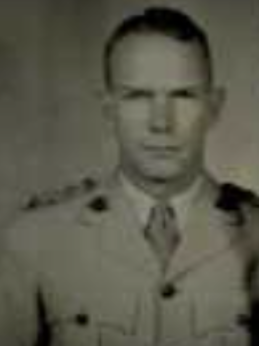
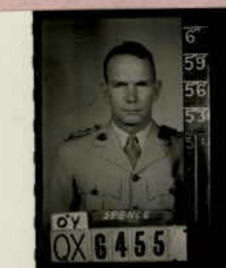
SPENCE, Alexander
| Service Numbers: | Q185252, QX6455 |
|---|---|
| Enlisted: | 19 August 1939, Moiwera, Whitsunday Region, Qld, Australia |
| Last Rank: | Major |
| Last Unit: | 2nd/9th Cavalry (Commando) Regiment |
| Born: | Bundaberg, Qld, Australia, 5 February 1906 |
| Home Town: | Bowen, Whitsunday, Queensland |
| Schooling: | Woongarra School |
| Occupation: | Reporter / Journalist |
| Died: | Natural Causes, Brisbane, Qld, Australia, 10 July 1983, aged 77 years |
| Cemetery: |
Mount Gravatt Cemetery & Crematorium, Brisbane L11-594, Lawn 11/Grave 594 |
| Memorials: | Queensland Garden of Remembrance (Pinnaroo), Qld |
Non Warlike Service
| 19 Aug 1939: | Involvement Australian Army (Post WW2), Lieutenant, Q185252, 2nd/3rd Infantry Battalion, Reference: (NAA, Pg's, 27, 48) | |
|---|---|---|
| 19 Aug 1939: | Enlisted Australian Army (Post WW2), Lieutenant, Q185252, 2nd/3rd Infantry Battalion, Moiwera, Whitsunday Region, Qld, Australia | |
| 24 Jun 1940: | Discharged Australian Military Forces (WW2) , Captain, Q185252, 2nd/3rd Infantry Battalion, Reference: (NAA, Pg's, 27, 48). |
World War 2 Service
| 25 Jun 1940: | Involvement Captain, QX6455, 2nd/26th Infantry Battalion, Reference: (NAA, Pg's-9, 10). | |
|---|---|---|
| 25 Jun 1940: | Enlisted Australian Military Forces (WW2) , Major, QX6455 | |
| 25 Jun 1940: | Enlisted Captain, QX6455, 2nd/26th Infantry Battalion, Moiwera, Whitsunday Region, Qld, Australia; (NAA, Pg-9). | |
| 25 Nov 1940: | Promoted Captain, 2nd/26th Infantry Battalion, Reference: (NAA, Pg-9). | |
| 13 May 1941: | Transferred Australian Military Forces (WW2) , Captain, 2nd/2nd Independent Company / Cavalry Commando Squadron, Reference: (NAA, Pg-10). | |
| 5 Jul 1941: | Promoted Australian Military Forces (WW2) , Major, 2nd/2nd Independent Company / Cavalry Commando Squadron, Reference: (NAA, Pg-23). | |
| 3 Oct 1941: | Transferred Major, 2nd/2nd Independent Company / Cavalry Commando Squadron, Reference: (NAA, Pg-10). | |
| 20 Nov 1942: | Promoted Lieutenant Colonel, 2nd/2nd Independent Company / Cavalry Commando Squadron, Reference: (NAA, Pg-11). | |
| 1 Apr 1943: | Transferred Lieutenant Colonel, 2nd/3rd Independent Company / Commando Squadron, Reference: (NAA, Pg-21). | |
| 17 Apr 1943: | Transferred Lieutenant Colonel, 2nd Commando Regiment, Reference: (NAA, Pg-21). | |
| 3 Jun 1943: | Honoured Companion of the Distinguished Service Order, AWM - Honours & Awards (Recommendation) - as per stated: Marked Leadership & courage, March /to May 1942, at Dilli, Timor-Leste. | |
| 20 Apr 1944: | Transferred Lieutenant Colonel, 2nd/9th Cavalry (Commando) Regiment, Reference: (NAA, Pg-22). | |
| 15 Feb 1945: | Promoted Major, 2nd/9th Cavalry (Commando) Regiment, Reference - as per stated: 15/02/1945, substitute "Major"; (NAA, Pg-22). | |
| 28 Feb 1945: | Discharged Major, QX6455, 2nd/9th Cavalry (Commando) Regiment, Discharge - as per stated: 28/02/1945, (app.) appointment terminated, 2/9th Cav-Com-Regiment [2nd/9th Cavalry Commando Regiment]; (NAA, Pg-22). | |
| 28 Feb 1945: | Discharged Australian Military Forces (WW2) , Major, QX6455 |
Help us honour Alexander Spence's service by contributing information, stories, and images so that they can be preserved for future generations.
Add my storyBiography contributed by Lyn Burke
Alexander (Alan) Spence, QX6455,was born in Bundaberg, 5th February, 1906. His mother had migrated with her family from Germany and his father came from Ireland in 1881 as a 22 year old to join his brother, Tom Spence. Alan’s parents Robert & Louise had a small cane farm in Bundaberg where he attended Woongarra School. He left at 14 to be apprenticed to the Bundaberg newspaper. Alan represented Queensland as a member of the Queensland Senior Fours in the Australia Rowing Championships in Melbourne, 1925, where they won the Kings Cup.
The Spence family left the cane farm in 1925 & went to live in Longreach where Alan joined the Longreach Leader as a journalist. He became a champion tennis player of the Central West during 1920’s/1930’s & also played representative cricket & football. Alan was a member of the CMF before war broke out. He obtained his commission while serving with the 26th CMF Battalion. Shortly after Australia entered the war, training camps were set up & in 1940 Alan was sent to Miowera, north of Proserpine where he enlisted with the 2nd A.I.F on 25th June, 1940. It was a Brigade camp & comprised of 26th, 31st, 51st & 42nd CMF battalions. While based in Miowera, Alan met Dot Caine from Bowen & they were married on 2nd July, 1941. Alan was later moved to Redbank & Grovely army camps & was promoted to 2nd in charge of 2/26th Infantry Battalion, which later headed for Singapore. While at Bathurst with his Battalion he was selected with other volunteers to proceed to Wilson’s Promontory for further training (later revealed as Commando training by British Commandos).
Promoted to Major, Alan became CO of the 2/2nd Independent Company from its inception in 1941. They were sent into Dutch Timor on 12th December, 1941 as part of “Sparrow Force” to defend the vital airfield against Japanese attack. After the fall of Singapore in February, 1942, a large Japanese force of 5,000 landed in Koepang in the Dutch western half of Timor & swiftly overwhelmed most of the Islands Australian & Dutch defenders. Sadly 1,137 Australians, most of the 2/40th Battalion, where captured & many lost their lives on the Burma-Thailand railway. The only troops to avoid capture were the 300 commandos of 2/2nd Independent Company & they transferred to Portuguese Timor (West Timor).
When a 1,000 Japanese attacked Dilli they met a different type of defence. The 2/2nd was trained for guerilla warfare & ints 327 officers & men staged an orderly retreat into the hills south of the capital. They waited till the Japanese relaxed their guard & hit them quickly & hard in a counter attack. The Japanese were so disoriented by the surprise raid that the Australians were able to regroup unmolested into the mountains. After the Japanese invasion “Sparrow Force” had lost communications with Australian Headquarters & were believed to be missing. The unit ignored the Japanese demands to surrender & fought a guerilla war on the island’s hills. The Commandos relied on the local people for food, transport & support. “Sparrow Force tied up an entire Japanese Division. The Japanese Commander had posted a reward for Alan’s capture. His response was to quote Churchill’s famous words “We will never surrender”. Every commando had a personal assistant called a criado & for 3 months Australian Headquarters did not realize that “Sparrow Force” had survived until the commandos made contact using a makeshift radio nicknamed “Winnie the War Winner”. News of his daughter’s birth in Stanthorpe on 19th May,1942 was conveyed over this radio three months late.
“Sparrow Force”. The company had limited ammunition & was riddled with malaria but they managed, without rations or medical supplies, to fight a successful guerilla campaign for 10 months. After contact with Darwin was established the company was able to arrange for supplies to be landed at regular intervals by small boats.
They also recruited several hundred Timorese & proceeded to harass the Japanese with audacious raids & ambushes. Their tactics were so successful that they pinned down the Japanese for months & accounted for 1,500 of the enemy for the loss of 40 of their own.
So successful was the campaign & so great its effect on morale at the time of continuing bad news, that the Commander of the Allied Forces in the south-west Pacific, General MacArthur vetoed suggestions by Australian Commander In Chief General Blamey, that they be evacuated. “Sparrow Force” he said “was too valuable to the war effort to be brought out”. During their relatively short time in the mountains, they had achieved a remarkable feat of arms. For nearly a year this isolated force of just 300 men had tied down a vast superior enemy. More importantly, as General MacArthur had realised, they had demonstrated the vulnerability of the Japanese who, until then, had been afforded “super soldier” status. Their presence & aggressive tactics convinced the Japanese that an Allied effort to retake Timor was in the offing & the battle-hardened Japanese 48th Division was diverted from New Guinea to reinforce the existing garrison of 6,000 men & await an invasion that never came. The 48th Division was an experienced division of 15,000 men who had served in China, the Philippines & Java. The commandos had drawn to Timor & held there almost 30,000 Japanese troops the worst time in the war for the Allies. This was an amazing feet & few soldiers in history could claim to have done more that that. At this time the Japanese advance in Burma had been halted, the American Marines were fighting in Guadalcanal & bitter fighting was in progress in Papua.
The stood & fought when practically every other unit in the far East was forced to surrender. They evacuated in good order & became operational again as a detachment in New Guinea. They were 1 of 3 small forces which between them immobilised 2 Japanese divisions. Alan was awarded the Commander in chiefs Commendation Card for “Coolness & Leadership in Timor” from 19th March to 25th May,1942. Alan was later awarded the Distinguished Service Order (DSO), 1 of only 267 awarded in World War 2, among all Commonwealth countries. The citation reads that he “showed marked leadership in commanding the 2/2nd Independent Company & his example acted as an inspiration to the Officers & men of the company. The Company inflicted heavy casualties on the enemy as guerilla troops & carried out many daring & successful exploits. By his cool, logical demeanour & steadiness under all circumstances, he has greatly stimulated the members of his company.”
Alan was recalled to Australia & was called to brief General MacArthur on guerilla warfare against the Japanese. Later he was appointed in charge of Jungle Warfare Training at Canungra. Whilst at Canungra Alan collapsed & had to be admitted to Greenslopes Hospital with amoebic dysentery. After his recovery, Alan became CO of the 2/9th Cavalry Commando Regiment. He was discharged from the army on 28th February, 1945 & he & his wife Dot bought the Proserpine Guardian in July 1945.Dot’s father, EJ Caine, was the local solicitor in Bowen & also a member of Parliament in 1911.
Adding to her father’s very impressive war record, Alan & Dots eldest daughter, Genevieve, continues with the Spence family’s life in Proserpine.
I was 3 years old when Mum & I left Bowen to joint Dad in Proserpine. Dad had been boarding with Mrs Macartney on the corner of Marathon & Teals Streets. We all lived there for 6 weeks & it was the 1st time we had lived together as a family. In order to help Dad, Mum would take me down to the office in the pram & they would walk home after work. We moved next door when Mr & Mrs Alan Scott’s house became available. The house was a high-set early Queenslander with verandahs all round. We had everything growing in the garden including bananas, mangoes, custard apples, citrus fruits, sweet potatoes, beans & chillies. We also had a windmill which was behind Miss Reid;s house next door, a chook run, a goats house & a fern house.
In the early days Dad worked very hard, including at the weekends, getting the business established & Mum did the proof reading, the banking & the bookwork. She also served in & ordered for the stationary shop. I remember when Mum ordered her 1st greeting cards stand. I remember the excitement when Dad purchased the Thompson Platen printing machine in the 1950’s. It was always called “the Thompson”. Dad rode a bike to work & the Wright family who lived near by used to laugh when they saw him riding past so slowly they wondered how he could keep the bike upright. We bought our 1st car in 1954.
Dad was the 1st life member of the Proserpine Ex-Servicemen’s Club. He always led the Anzac Day Parade which embarrassed me as a child when he would call out the orders to the men. He was a member of Rotary club, the golf club & the Masonic Lodge. He seemed to be at a meeting every night.
I used to deliver the Guardians after school on Fridays & my sister Patricia also worked in the office. The Guardian workplace was very noisy & Dad was usually found operating the Linotype except on Fridays when he would be printing the paper. He always felt tense & anxious until the paper was printed.
My parents built their own house in Fuljames Street in 1954. The view at the back was lovely as we looked out over sugar cane paddocks to the mountains beyond. Louise was born in 1954 with cerebral palsy & as there were no facilities in Proserpine at the time, My parents reluctantly decided to sell the business & move to Brisbane in 1960. Later he bought another paper The Fassifiern Guardian in Boonah. Dad died in his sleep on 10th July, 1983 aged 77 years.
Proserpine Historical Museum Magazine
Biography contributed by Daniel Bishop
Son of Robert John SPENCE & Louisa Margaretha Marie (nee-KOOB) SPENCE.
Next of Kin - Wife: Dorothy Emily (nee-CAINE) SPENCE.


Click images to start slideshow.