








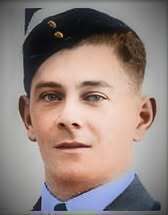
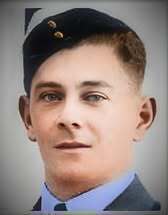
TREBILCOCK, Colin Eric
| Service Number: | 417678 |
|---|---|
| Enlisted: | 20 June 1942 |
| Last Rank: | Flight Sergeant |
| Last Unit: | No. 10 Squadron (RAF) |
| Born: | Woodville, South Australia, Australia , 20 September 1921 |
| Home Town: | Waikerie, Loxton Waikerie, South Australia |
| Schooling: | Waikerie State School, South Australia, Australia |
| Occupation: | Porter, South Australian Railways |
| Died: | Flying Battle, North West Europe, 29 January 1944, aged 22 years |
| Cemetery: |
No known grave - "Known Unto God" Colin is also commemorated with a tree and plaque in the Waikerie War Memorial Gardens. Runnymede Memorial Englefield Green, Runnymede Borough, Surrey, England Panel 262 |
| Memorials: | Adelaide South Australian Railways WW1 & WW2 Honour Boards, Adelaide WW2 Wall of Remembrance, Australian War Memorial Roll of Honour, International Bomber Command Centre Memorial, Runnymede Memorial, Waikerie Primary School Old Scholars Roll of Honor, Waikerie War Memorial |
World War 2 Service
| 3 Sep 1939: | Involvement Flight Sergeant, 417678 | |
|---|---|---|
| 20 Jun 1942: | Enlisted Adelaide, South Australia, Australia | |
| 20 Jun 1942: | Enlisted Royal Australian Air Force, Flight Sergeant, 417678 | |
| 20 Jun 1942: | Involvement Flight Sergeant, 417678 | |
| 20 Jun 1942: | Enlisted Adelaide | |
| 21 Jun 1942: | Involvement Leading Aircraftman, Empire Air Training Scheme | |
| 29 Jan 1944: | Involvement Royal Australian Air Force, Flight Sergeant, 417678, No. 10 Squadron (RAF), Air War NW Europe 1939-45 |
Help us honour Colin Eric Trebilcock's service by contributing information, stories, and images so that they can be preserved for future generations.
Add my storyBiography contributed by N. Campbell
Flight Sergeant
Colin Eric TREBILCOCK
20-9-1921 – 29-1-1944
Colin Eric TREBILCOCK was born on 29th September 1921 to Lancelot Eric and Ida Rose Ann Trebilcock at Woodville. Colin’s parents lived in “the schoolhouse”, Waikerie as Lance was the Head Teacher. Lance was also the Flight Commander of the Waikerie Air Cadets.
Colin was the oldest child and had a brother, Royden. Col worked as a Porter for the South Australian Railways at Waikerie before enlisting.
Colin was married to Eileen Mary RAINEY of Waikerie on the 7th of March, 1942 and they lived at Waikerie. Colin enlisted in the Royal Australian Air Force in Adelaide on June 20, 1942,
Eileen enlisted in the Womens Auxiliary Australian Air Force on 26th March 1943 and was later posted to Melbourne.
After his initial training, Colin embarked for overseas on 30th March 1943. He arrived in England on 7th July, 1943 and was formed as part of a crew during training at 19 Operational Training Unit before coming to their new posting as a pre formed crew. They were taken on strength with 10th Squadron, RAF on 14th December 1943.
The final full crew mates were:
Flying Officer Cyril LARGE: (RAF) Pilot & Captain; 151473, 34-years old and son of Charles & Jenny and husband of Myra of Colwyn Bay, Denbighshire, Wales.
Flight Sergeant (F/S) John Gordon HODGKINSON: (RAF) Navigator; 1393662 of Carshalton, Surrey, England.
Sergeant (Sgt) Kenneth Raymond CORBETT: (RAF) Flight Engineer & Second Pilot,1582857, 20-years old, son of Albert & Ellen of Erdington, Birmingham, England.
F/S Joseph Bertram SPARK (RCAF) (DoB: 08.04.1916): Bomb Aimer & Front Gunner; R157607 of Victoria, British Columbia, Canada.
Sgt Reuben MARTIN – (RAF) 1579977 (DoB) 6th October 1923, son of Thomas William Martin &Lily Flossie (nee Purcell) of 11 Wilmot Road, Old Park UK.
Sgt. George ARMSTRONG: (RAF) Mid-Upper Gunner; 1570702, 20-years old, son of Edward & Jeanie and husband of Martha of Paisley, Renfrewshire, Scotland.
Sgt. Colin Eric TREBILCOCK (RAAF): Tail Gunner; 417678, 22-years old, son of Lancelot Eric & Ida Rose Ann and husband of Eileen May of Waikerie, South Australia.
No.10 Squadron was based at “RAF Melbourne” base in Yorkshire. No 10 Squadron were flying Handley Halifax Bomber aircraft and were in fairly constant action, flying on repeated raid missions mainly over Italy and Germany.
**An extract of the entry from No.10-Squadron’s Operational Record Book (ORB) from December1943 that records the crew joining the squadron is attached.
------------------The first mission (21-1-1944) : -----------------
On 21st January 1944 the crews first operational mission was when they flew in Halifax Bomber II JN907 ZA-X as part of twenty aircraft from his squadron that took part in an attack on the German city of Magdeburg.
In total of 648 aircraft - 421 Lancasters, 224 Halifaxes and 3 Mosquitoes – took part in this the first major raid to Magdeburg.
While over the target, one of their 2000-lb High-Capacity bombs that they were carrying became hung-up (stuck) within the bomb-bay! It had to be released manually before it would release & drop.
** An extract of the entry from No.10-Squadron’s Operational Record Book (ORB) in relation to JN907’s involvement in this operation is attached.
+++++++++++++++++++++++++++++++++++++++++
Halifax Bomber JN907 had been transferred from 158-Sqn to 10-Sqn when 158 Sqn started to receive the new and superior Halifax B-III. The bomber had been delivered to 158-Sqn in August 1943. It was usual practice for new & inexperienced crews to be allocated such aircraft.
+++++++++++++++++++++++++++++++++++++++++
---------------The second mission (28/29-1-1944):-----------------
The crews second mission was on the night of 28th / 29th January 1944. 10th squadron was part of a large operation consisting of 677-aircraft; 432 Lancasters, 241 Halifaxes & 4 Mosquitoes, to bomb Berlin.
They had a different Halifax B-II for this mission - HR952 with callsign “ZA-T” (picture attached) – which took-off from RAF Melbourne at 00:16-hours on 29th January. It would not return.
++++++++++++++++++++++++++++++++++++++++++
HR952 -A Handley Halifax B-II Bomber :-
HR952 was another aircraft that had been manufactured in 1943. It had been first delivered to 51-Sqn based out of RAF Snaith in August of that year, there it had the callsign MH-X.
At the start of Jan-1944, 51-Sqn was stood-down from operations whilst it received the Halifax B-III and HR952 was transferred to 10-Sqn and took callsign ZA-T. The photo of HR952 shows it being loaded with bombs prior to an operation whilst with 51-Sqn.
+++++++++++++++++++++++++++++++++++++++++++
The bomber stream on that fateful January night flew an unusual route to Berlin, North east over the North Sea & over Denmark and South East over the Baltic towards Berlin. RAF losses on the raid would be heavy; 46-aircraft (26 Halifax’s & 20 Lancaster’s) fell to the enemy.
Earlier in the evening Mosquitos had carried out a nuisance raid on Berlin in a bid to convince the Germans that their capital was not scheduled for a heavy raid that night. This was followed by sixty-three Stirling Bombers mine-laying off Kiel aided by Pathfinders to further puzzle the Luftwaffe about where a major raid was planned.
However, the Stirling Bombers were too far north of Berlin and resulted in the Luftwaffe night-fighter controllers directing, maintaining & concentrating their fighters within the vicinity of the city and poised to strike at the men & aircraft in the Bomber stream as it headed to & from Berlin.
It is estimated that Colin’s Halifax reached Berlin between 03:00 & 03:40-hours. This is based on other aircraft from his squadron – (ZA-B and ZA-S) – which took off from Melbourne at 23:55 and 00:03-hours reaching Berlin at 03:29 and 03:22-hours respectively.
No radio transmissions were received from the aircraft.
With a total mission time of 7-hours, HR952 ZA-T is reported to have crashed at Freidrichshagen into the Kopenick Forest on the North West shore of the “Grosser Muggelsee”
(This is Lake Müggelsee, a lake in the eastern suburbs of Berlin. It is the largest of the Berlin lakes by area, with an area of 7.4 square kilometres (2.9 sq mi), a length of 4.3 kilometres (2.7 mi) and a breadth of 2.6 kilometres (1.6 mi) and is approximately 10-miles SE from the centre of Berlin).
The cause of HR952’s loss was never established, though as no claims to having shot it down were submitted by Luftwaffe night-fighters, it is probable that it was a victim of the German flak.
Other aircraft involved in the mission reported that German flak was moderately heavy and that searchlights were ineffective due to the cloud cover.
Of the seven members of the crew, only F/S Spark survived. He became a prisoner of-war at Stalag Luft VI.
During an interview following his liberation, (the now) Warrant Officer Spark confirmed that only he and the Navigator (Hodgkinson) escaped the aircraft. Both men would have been near the front of the Halifax, indicating that the aircraft was hit astern or amidships, sustaining immediate & catastrophic damage, rather than suffering a mechanical failure. If it had been the latter, it is likely that more, if not all, of the crew could have made their escape.
Warrant Officer SPARK stated that he did not see Flight Sergeant John Hodgkinson’s parachute open and believes he may have fallen to his death.
**An extract of the entry from No.10-Squadron’s Operational Record Book (ORB) in relation to HR952’s involvement in this operation is attached.
At the time the crew were posted as “Missing in Action – Mission Berlin”.
On 1-6-1944, Colin was officially posted as “Missing Presumed Killed in action” by the RAAF.
Eilleen TREBILCOCK (WRAAF Service picture below) was granted 20 days “special leave without pay” when she was notified Colin had gone missing and was now presumed dead. She continued her valuable service with the WAAAF until the war ended transferring to a posting at Gawler after Colins death.
Eileen later remarried and moved from the Waikerie area but was fiercely proud of her deceased husbands service and sacrifice.
Later the Halifax II was subsequently withdrawn from operations to Germany as it had proven to be too vulnerable to attacks from Luftwaffe night-fighters and anti aircraft fire (flak).
Reports from the time indicate that Colin & his crew members were “buried with honour” locally in Freidrichshagen cemetery, Berlin. International Red Cross reports indicated they were interred in a mass grave.
In the post-war years, the RAF’s Missing Research and Enquiry Unit (MREU ) could not be locate their remains as Freidrichshagen fell within the Soviet area of control. Access to the site was restricted.
The crew are therefore commemorated on the Runnymede Memorial for the missing.
The RAF’s MREU were part of the Missing Research & Enquiry Service (MRES) which was set up in1944 to trace the 42,000 personnel who were listed as 'missing, believed killed'. This included RAAF personnel.
Like thousands of their comrades, the men were killed whilst on one of their first five operations. This was the most likely time for a crew to be shot down as their inexperience told and they were amongst the 55,573 airmen of Bomber Command who would lose their life. A further 9,838 became Prisoners-of-War and a further 8,403 would suffer wounds.
With an average age of 22-years old, these young airmen (all volunteers) allowed Bomber Command to begin operating immediately at the start of the War and fight continually through to May-1945.
The aircrew, with the odds heavily stacked against them, took the fight to the German aggressors and their allies and defended the United Kingdom from invasion.
The cost was high. Their remarkable endeavours were laid out in Winston Churchill’s famous “The Few” speech
" The gratitude of every home in our Island, in our Empire, and indeed throughout the world, except in the abodes of the guilty, goes out to the British airmen who, undaunted by odds, unwearied in their constant challenge and mortal danger, are turning the tide of world war by their prowess and by their devotion.
Never in the field of human conflict has so much been owed by so many to so few.
All hearts go out to the fighter pilots whose brilliant actions we see with our own eyes day after day, but we must never forget that all the time, night after night, month after month, our bomber squadrons travel far into Germany, find their targets, often under the heaviest fire, often with serious loss, with deliberate, careful discrimination, and inflict shattering blows upon the whole of the technical and war-making structure of the Nazi power.
On no part of the Royal Air Force does the weight of the war fall more heavily than on the daylight bombers who will play an invaluable part in the case of invasion and whose unflinching zeal it has been necessary in the meantime on numerous occasions to restrain."
Colin Eric TREBILCOCK was posthumously awarded three campaign medals; the 1939-45 Star, the Aircrew Europe Star and the British War Medal. In 2013, the award of the Bomber Command clasp to be worn on the 1939-45 Star was announced this would be added to TREBILCOCKs medals.
------------------------------------------------------------------------
Postscript:-
Recent research has revealed that had the crew been again allocated JN907 for their second operation they wouldn’t have died.
JN907 was scheduled to participate in the raid but was allocated to another crew and shortly after take-off it developed engine problems and their mission had to be abandoned.
JN907 was withdrawn from frontline service shortly after and transferred to No.1652 Conversion Unit.
**An extract of the entry from No.10-Squadron’s Operational Record Book (ORB) in relation to JN907’s involvement in this operation is also attached.
------------------------------------------------------------------------
Recent information led to further enquiries in Germany in the hope of locating Colins grave and that of the other aircrew who died with him.
Commonwealth War Graves Commission, the Australian Embassy and The Australian Military Attaché in Germany all made extensive enquiries which unfortunately have not been able to locate the graves of these men.
It is believed that they, along with other Allied airmen, would have likely been buried in the forest near the cemetery after Adolf HITLER declared that no enemy could be buried in consecrated ground anymore.
This forest area is treated as a cemetery, it is unknown how many men are buried there.
As such all possible enquiries have come to an end.
We may not have found them, but we will never forget them.
Colin TREBILCOCK is commemorated at the Runnymede Memorial and is commemorated on the Australian War Memorial on the Roll of Honour.
Colin is also commemorated in the Waikerie Soldiers Memorial Hall on the 1939-1945 Honour Board and with a tree and plaque in the WAIKERIE War Memorial Gardens.
LEST WE FORGET
***Thanks to Anthony ROWLEY,
(a researcher from the UK looking into crew members Reuben MARTIN & George ARMSTONG) who supplied further information and photos used in this memorial post.
His blog https://rowleyanth.wordpress.com/.../in-memory-of-six-of.../ about the crew of HR932 including Col TREBILCOCK is very much worth a look!


Click images to start slideshow.